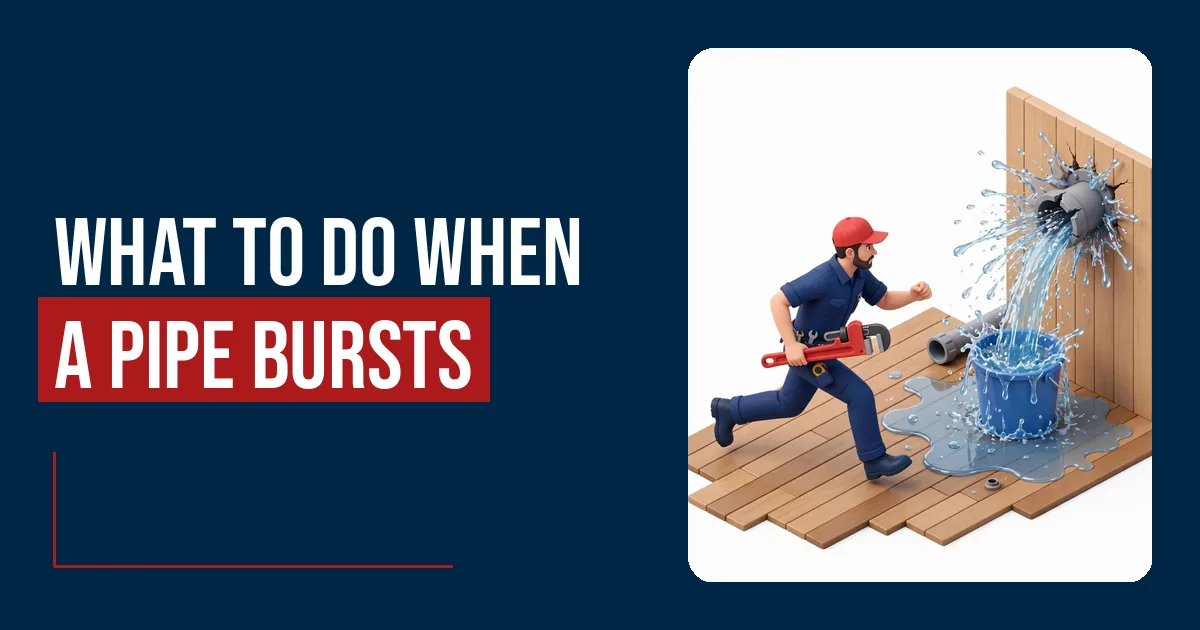
A burst water pipe can quickly turn an ordinary day into a stressful emergency. Water may spread across floors, soak carpets, damage furniture, penetrate drywall, and affect home electrical systems in minutes.
Even a relatively small pipe break can release hundreds of gallons of pressurized water if left unchecked. Knowing what to do when a pipe bursts helps you protect your property, reduce severe water damage, and avoid unnecessary repair costs.
The most important rule is to act quickly without putting yourself at risk. Shut off the water supply immediately, stay clear of electrical hazards, contact a professional plumber, and begin safe water extraction as soon as the area is secured.
This comprehensive guide explains the immediate steps to take when a pipe bursts, how to safely shut off your water, what to do after the flow stops, and how to prevent future plumbing failures.
In This Guide
- What Should You Do Immediately When a Pipe Bursts?
- 1. Shut Off the Main Water Supply Immediately
- 2. Stay Away From Electrical Hazards
- 3. Drain the Remaining Water From Your Pipes
- 4. Contact a Professional Plumber
- 5. Remove Standing Water as Soon as It Is Safe
- 6. Document the Damage for Your Insurance Company
- 7. Dry the Affected Area Thoroughly
- 8. Check for Hidden Water Damage
- 9. Identify Why the Pipe Burst
- 10. Take Steps to Prevent Future Pipe Bursts
- What Happens If a Pipe Bursts in Your House?
- Frequently Asked Questions About Burst Water Pipes
- Act Fast to Protect Your Home When a Pipe Bursts
What Should You Do Immediately When a Pipe Bursts?
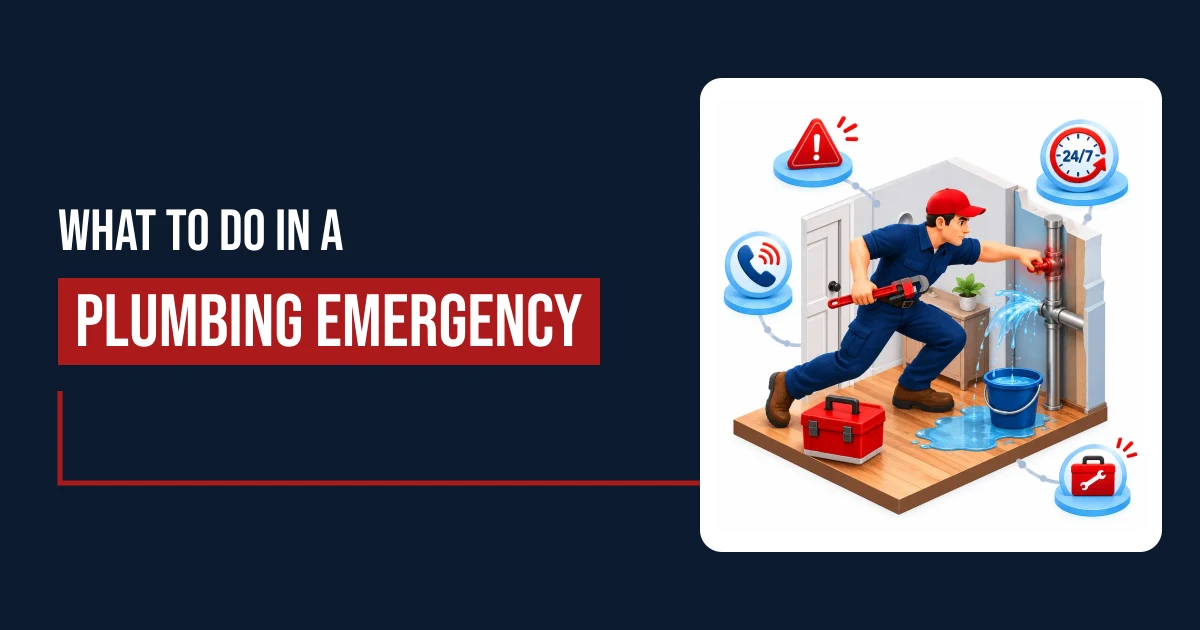
If a water pipe bursts in your home, follow this 10-step emergency sequence right away:
- Shut off the main water supply: Cut off pressurized flow to prevent continuous flooding.
- Turn off electricity in affected areas: Avoid electrical shock if water is near outlets or appliances.
- Open faucets to drain remaining water: Relieve trapped line pressure and empty vertical pipes.
- Turn off your water heater: Prevent heating element burnouts while the tank is unpressurized.
- Contact a professional plumber: Call for prompt line repair and system pressure testing.
- Remove standing water when safe: Extract standing surface water to limit structural soaking.
- Move furniture and belongings away: Relocate rugs, upholstery, and electronics to dry areas.
- Photograph the damage for insurance: Document structural and contents damage before cleanup.
- Dry the affected areas thoroughly: Deploy dehumidifiers and fans to inhibit rapid mold growth.
- Arrange professional restoration if necessary: Address soaked subfloors or wall cavities.
Safety Priority: If water is pooling near electrical outlets, appliances, exposed wiring, or your main service panel, do not step into standing water or touch electrical switches. Leave the flooded room and contact an electrician or emergency authorities immediately.
1. Shut Off the Main Water Supply Immediately
Stopping the source of water is the single most urgent step you must take. Every minute water runs under standard residential pressure (50 to 70 PSI), several gallons flood into your floors, ceiling drywall, and structural framing.
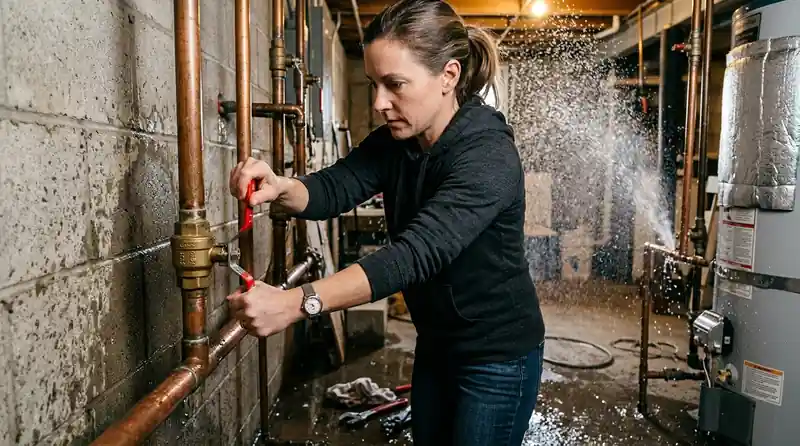
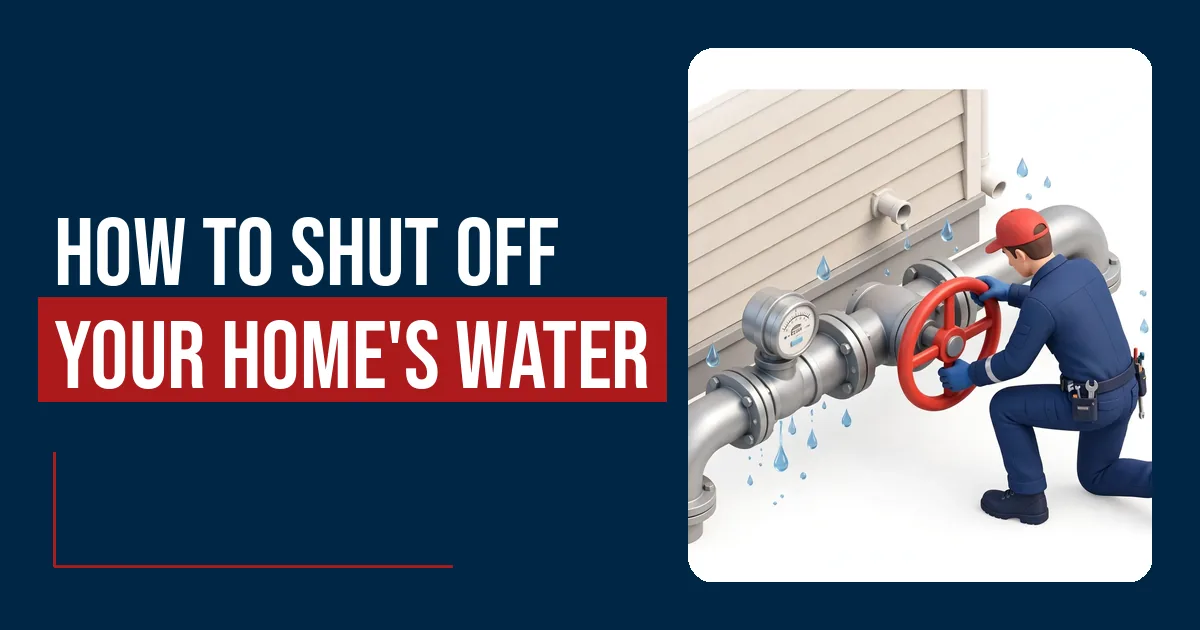
Turn off your main water shut-off valve immediately when a pipe bursts to prevent catastrophic structural flooding.
Where Is the Main Water Shut-Off Valve?
The location of the main shut-off valve depends on the layout and age of your home:
- Interior Valve: Commonly situated in the basement, garage, mechanical utility room, crawl space, or near where the water line enters the foundation.
- Exterior Ground Meter Box: In many East Texas homes built on concrete slabs, the main shut-off valve is located outdoors near the curb inside an in-ground meter pit with an iron or plastic lid.
How to Turn Off the Main Water Valve
If you have a modern ball valve (with a straight lever handle), turn the lever a quarter turn until it sits perpendicular (at a 90-degree angle) to the pipe. If you have an older gate valve (round wheel handle), turn it clockwise ("righty-tighty") until it is completely seated. For detailed guidance, read our tutorial on how to shut off your home water supply.
Can You Shut Off Water at a Single Fixture?
If the rupture is confined to an exposed supply line under a bathroom sink or behind a toilet, you can turn that individual fixture's oval stop valve clockwise to halt the leak. However, if the burst is hidden inside walls, above ceilings, or involves a main line, always shut off the whole-house valve.
2. Stay Away From Electrical Hazards
Water and electricity form an extremely dangerous combination. Escaping water can travel along wiring runs, pool inside ceiling light fixtures, penetrate wall outlets, or run toward your electrical service panel.
- Never step into standing water that may be in contact with electrical cords, outlets, or appliances.
- Do not touch light switches, lamps, or power strips in water-damaged rooms.
- If you can safely access the main circuit breaker panel while standing in a completely dry area, turn off power to the flooded rooms. If the breaker box is wet or surrounded by water, do not approach it—call your electric utility immediately.
3. Drain the Remaining Water From Your Pipes
Even after turning off the main shut-off valve, several gallons of water remain trapped inside your home's vertical and overhead pipes. Opening faucets drains this reservoir through plumbing drains rather than continuing to leak out of the break.
- Open all cold-water faucets starting with outdoor hose bibbs and lowest-level fixtures (basement or ground floor).
- Open upper-level cold faucets to release line vacuum and allow pipes to drain fully.
- Flush toilets to empty their storage tanks.
- Open hot-water faucets once your water heater has been safely turned off.
Should You Turn Off Your Water Heater?
Yes. When the plumbing system is drained, a water heater can lose internal water volume. If electric heating elements fire in an empty or partially drained tank, they will burn out in seconds. For gas units, continuing to heat without incoming cold water can cause pressure valve discharges or overheating. Switch off electric breakers for the unit, or turn gas controls to "Pilot" or "Off". Learn more about safeguarding your system in our water heater maintenance and repair guide.
4. Contact a Professional Plumber
A burst pipe is an urgent plumbing emergency that requires licensed expertise. While you can contain surface water, repairing pressurized water lines involves cutting out damaged sections, installing proper copper or PEX couplings, and pressure-testing the entire system.
Should You Repair a Burst Pipe Yourself?
DIY slip clamps, rubber wraps, or spray sealants are only temporary bandages designed to hold minimal drips until help arrives. They cannot reliably hold dynamic municipal water pressure. Improper repairs hidden inside closed walls often fail later, leading to catastrophic secondary flooding and denied insurance claims.
Need Emergency Pipe Burst Repair in Tyler, TX?
Don't let water damage escalate. Our licensed technicians provide 24/7 rapid response for pipe repairs, leak isolation, and system restorations across Tyler and Smith County.
Call (903) 707-88895. Remove Standing Water as Soon as It Is Safe
Once electrical hazards are eliminated and the water supply is off, begin removing standing water immediately. Standing water quickly wicks up baseboards, absorbs into drywall, and ruins subflooring.
- Use mops, old towels, and buckets for shallow surface pooling.
- Deploy a commercial wet/dry shop vacuum to pull water out of soaked carpets and tile crevices.
- Squeegee hard floors toward exterior doors or floor drains if feasible.
What Should You Do With Wet Furniture and Belongings?
Move wet wooden furniture, area rugs, cardboard storage boxes, and bedding into a dry, ventilated room. Place aluminum foil squares or plastic wrap under wooden and metal furniture legs that cannot be moved immediately to prevent staining carpets and floor finishes.
6. Document the Damage for Your Insurance Company
Thorough photographic and video evidence is vital before you throw away damaged items or begin demolition:
- Take high-resolution photos and wide-angle videos of the burst pipe, water spray patterns, and all affected rooms.
- Photograph individual damaged belongings, electronics, furniture, carpets, and drywall high-water lines.
- Keep serial numbers, purchase receipts, and model details for high-value items ruined by water.
- Save samples of carpeting, padding, and damaged pipe sections if an insurance adjuster needs inspection.
Does Homeowners Insurance Cover a Burst Pipe?
Standard homeowners insurance policies typically cover sudden, accidental burst pipe water damage, including flooring replacement, structural drying, and drywall repairs. However, insurers may deny or limit claims if the damage resulted from gradual long-term corrosion, unresolved slow leaks, or negligence (such as unheated vacant properties during freezing weather).
7. Dry the Affected Area Thoroughly
Removing visible water is only half the battle. Deep moisture trapped within subflooring, carpet padding, and wall cavities must be dried rapidly to stop microbial growth.
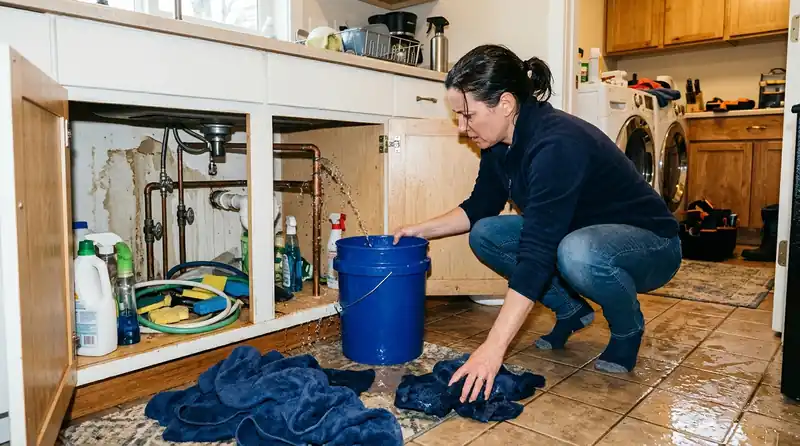
Extract water and deploy high-volume dehumidifiers immediately to protect building materials and stop mold development.
How to Dry a House After a Pipe Bursts
- Position oscillating and box fans to direct airflow across damp floor surfaces and walls.
- Run high-capacity dehumidifiers continuously to pull airborne moisture out of the living space.
- Open cabinet doors under vanities and sinks to ventilate enclosed framing.
- Lift wet carpet away from tack strips and remove soaked foam padding, which rarely dries before molding.
- Open interior doors to encourage uniform circulation throughout the house.
How Quickly Can Mold Develop After a Pipe Burst?
Mold spores can germinate and begin active colonial growth within 24 to 48 hours in damp, warm environments. Getting relative indoor humidity below 50% within the first day is crucial to safeguarding your indoor air quality.
8. Check for Hidden Water Damage
Water follows gravity and paths of least resistance. A pipe burst on an upper floor often damages ceilings, insulation, wall studs, and subfloors two stories below:
- Sagging Ceilings: Look for discolored rings or bowing plaster/drywall. If a ceiling bubble forms, place a bucket beneath and puncture the center with a screwdriver to release water safely before the drywall collapses.
- Baseboards and Sill Plates: Check behind baseboards for trapped moisture that can rot floor framing.
- Crawl Spaces and Slabs: Inspect your crawl space or slab perimeter for standing water or soil erosion. If you suspect sub-slab plumbing breaks, review our guide on slab leak detection and repair.
9. Identify Why the Pipe Burst
Determining what caused your pipe to fail is necessary to ensure another break does not happen elsewhere on the property:
Frozen Pipes
During winter freezes, uninsulated pipes in attics, exterior walls, and crawl spaces freeze solid. As water turns to ice, it expands by approximately 9%, creating hydraulic pressures exceeding 2,000 PSI that split copper, PVC, and PEX lines. Review our guide on how to prevent frozen pipes for proactive winterization tips.
Corrosion
Older galvanized steel and copper lines exposed to acidic or hard water undergo gradual electrochemical deterioration, eventually developing pinholes and weak seams that rupture under normal pressure.
High Water Pressure
Residential plumbing fixtures and connections are rated for 50 to 70 PSI. If your street pressure regulator fails, municipal surges of 90 to 120+ PSI put immense strain on pipe joints and flexible hoses.
Aging Plumbing Materials
Plumbing systems past their service lifespan—such as polybutylene piping or 50-year-old galvanized lines—become brittle and fail without warning. A comprehensive home repiping resolves chronic failure points.
Physical Damage and Shifting Foundations
Nails driven into walls during renovations, accidental strikes, or shifting clay soil foundations can shear or bend plumbing lines until they fracture.
10. Take Steps to Prevent Future Pipe Bursts
Protecting your home against future plumbing disasters requires systematic preventive maintenance:
Insulate Exposed Pipes
Fit foam insulation sleeves or heat cables on all supply lines located in unconditioned spaces, including attics, garages, crawl spaces, and exterior walls.
Protect Pipes During Cold Weather
When sub-freezing temperatures arrive, disconnect garden hoses, cover outdoor spigots with insulated caps, open under-sink cabinet doors, and allow vulnerable faucets to run a pencil-thin drip.
Monitor Your Water Pressure
Test your pressure with an inexpensive hose-bibb pressure gauge. If pressure exceeds 75 PSI, have a plumber install or replace your pressure-reducing valve (PRV).
Consider a Smart Water Leak Detection System
Modern smart water monitors (such as Flo by Moen or Phyn) monitor whole-home water flow 24/7. When they detect an abnormal continuous flow characteristic of a pipe burst, they automatically shut off the main water valve in seconds, preventing catastrophic damage even when you are away from home.
What Happens If a Pipe Bursts in Your House?
Understanding the progressive consequences of an unresolved burst pipe underscores the necessity of fast action:
- Within Minutes: Hundreds of gallons flood across floor surfaces, seep through subfloors, and penetrate ceilings below.
- Within Hours: Drywall crumbles, wooden floorboards buckle and cup, and furniture veneers peel away.
- Within 24 to 48 Hours: Toxic mold colonies establish in damp insulation and drywall cavities.
- Within Weeks: Structural framing rots, foundation stability may be compromised, and repair expenses increase exponentially.
Frequently Asked Questions About Burst Water Pipes
Shut off the main water supply immediately if you can reach the valve safely. Stay away from electrical hazards, contact a professional plumber, and arrange water cleanup once the area is safe. Document the damage for insurance purposes.
The main water shut-off valve is commonly located in the basement, garage, utility room, crawl space, or near the point where the water supply enters the property. In many East Texas homes, it is located in a ground meter box near the curb.
If water is near electrical outlets, appliances, wiring, or other electrical equipment, keep away from the affected area. Turn off the relevant circuits only if you can safely access the electrical panel without entering a wet or hazardous area. Otherwise, contact an electrician or emergency services.
Yes. If the water supply has been shut off, take steps to prevent the water heater from operating without an adequate supply of water. Switch off an electric unit at its breaker panel, and follow manufacturer instructions to set a gas unit to pilot or off.
It depends on the location of the damage and whether the plumbing system remains safe to use. If the burst pipe affects the main water supply, system pressure, or water quality, avoid using any fixtures until the line has been inspected and repaired.
Possible signs include unexplained water stains, peeling paint, bubbling drywall, musty smells, unusual dripping or rushing water sounds, reduced water pressure, and unexpected spikes in your water bill.
Notify building management or your landlord immediately. If you can safely access the unit's water shut-off valve, turn it off right away. Stay away from electrical hazards, protect your belongings where possible, and take photos of all damage.
If the damaged pipe is on your private property line, keep people away from the flooded area and contact a plumber. If the problem involves a municipal water main or utility meter equipment, contact your local water utility immediately.
Shut off the main water supply, avoid electrical hazards, and call an emergency plumber. Never use an open flame or high-intensity blowtorch to thaw frozen pipes. Once repaired, ensure pipes are properly insulated and keep indoor temperatures steady.
Water expands as it freezes into ice. When ice blocks an uninsulated pipe, excessive hydraulic pressure builds up between the blockage and closed faucets, eventually rupturing the pipe wall or splitting joints.
Yes. Water that remains trapped in walls, subfloors, carpets, and baseboards can begin fostering active mold growth in as little as 24 to 48 hours. Prompt water extraction and rapid dehumidification are essential.
Drying time typically takes between 2 to 5 days depending on the volume of water released, affected materials, and air circulation. Saturated insulation, drywall, and hardwood flooring take longest and may require professional drying fans.
Standard homeowners insurance policies generally cover sudden and accidental water damage caused by burst pipes. However, coverage may be limited if damage resulted from long-term neglect, lack of heat, or unresolved gradual leaks.
A temporary patch or sealant product may slow minor weeping in low-pressure situations, but it cannot withstand standard household water pressure (50–70 PSI). It should never be relied on as a permanent fix for a burst pipe.
Homeowners are responsible for plumbing pipes located on their property between the water meter and the home interior. Municipal utilities maintain public water mains up to the meter box.
Act Fast to Protect Your Home When a Pipe Bursts
A burst pipe is a critical plumbing emergency that demands prompt, disciplined action. Remember the core sequence: shut off the main water supply immediately, avoid electrical hazards, and call for professional plumbing repair before water spreads further.
Once the immediate break is secured, extract standing surface water, document property damage for insurance, and dry structural materials thoroughly to prevent mold growth. Identifying why the failure occurred will help you protect vulnerable lines from repeated breaks.
When an unexpected pipe failure strikes, do not hesitate. Shut off the water, prioritize safety, and get professional assistance before minor damage becomes a major structural loss.
If you are dealing with a burst line or active leak and need an experienced plumber in Tyler, TX, Pro Plumbers Tyler is available 24/7 at (903) 707-8889 for immediate pipe repair and replacement and emergency dispatch. Also check our overview on what to do during a plumbing emergency for additional home safety steps.