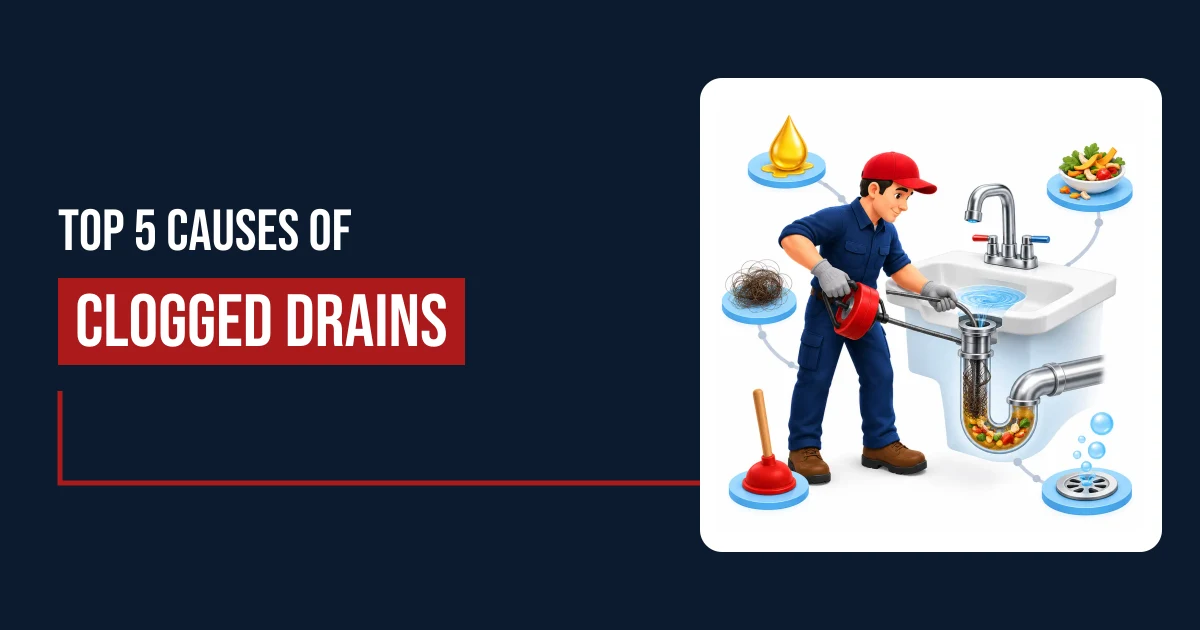
The top five causes of clogged drains are grease and cooking oil, hair bound with soap scum, food waste, foreign objects that should never go down a drain, and deeper pipe or sewer-line problems like tree roots and bellied pipes. Most clogs build up slowly - the drain runs slower and slower before it stops entirely - which means catching the cause early usually prevents a full backup. This guide from the licensed team at Pro Plumbers Tyler breaks down each cause, how to fix it, and how to keep it from coming back in your Tyler, TX home.
Clogged drains are the single most common plumbing call we get across Tyler and East Texas, and nearly all of them trace back to the same handful of causes. Understanding which one is behind your slow or blocked drain tells you whether it is a quick fix or a sign of something bigger in the line.
What's In This Guide
- How Drain Clogs Actually Form
- 1. Grease, Fats & Cooking Oil
- 2. Hair and Soap Scum
- 3. Food Waste and Coffee Grounds
- 4. Foreign Objects and Wipes
- 5. Pipe Problems & Tree Roots
- Kitchen vs. Bathroom Clogs
- Warning Signs a Clog Is Building
- How to Prevent Clogged Drains
- When to Call a Plumber
- Frequently Asked Questions
How Drain Clogs Actually Form
A drain rarely clogs all at once. Debris catches on a rough spot, a pipe joint, or the curve of the P-trap, and each new bit of grease, hair, or food sticks to what is already there. Over weeks or months the passage narrows until water slows to a trickle and finally stops. That is why a "sudden" clog almost always had warning signs - a slow drain, a gurgle, or a faint odor - long before it backed up.
In East Texas, one local factor speeds all of this up: hard water. Tyler-area water carries dissolved minerals that leave scale on the inside of pipes, giving grease and debris even more to cling to. Hard water does not clog a drain by itself, but it makes every other cause worse.
The 5 Most Common Causes of Clogged Drains
Grease, Fats, and Cooking Oil (FOG)
The number-one cause of kitchen drain clogs. Fats, oils, and grease - known in the trade as FOG - go down the drain as a warm liquid, then cool and harden inside the pipe into a waxy layer that traps everything else. Over time it builds into a solid plug. It is the single worst thing you can put down a kitchen sink.
Fix & prevent: Never pour grease down the drain. Let it cool, then scrape it into the trash. Wipe greasy pans before washing.
Hair and Soap Scum
The number-one cause of bathroom drain clogs. Loose hair washes into the drain and tangles around any rough spot, while soap - especially bar soap - leaves a sticky scum that binds the hair into a dense mat. In hard-water areas, mineral scale makes the scum cling even harder, so bathroom drains in Tyler clog faster than average.
Fix & prevent: Fit a hair-catching drain screen in every shower, tub, and bathroom sink, and clear it regularly.
Food Waste and Coffee Grounds
Even with a garbage disposal, certain foods clog drains: fibrous scraps (celery, corn husks), starchy foods (pasta, rice, potato peels) that swell and turn to paste, eggshells, and coffee grounds that settle and pack together like sediment. A disposal grinds food but does not stop it from accumulating downstream.
Fix & prevent: Scrape plates into the trash, keep coffee grounds and fibrous or starchy foods out of the drain, and run cold water while using the disposal.
Foreign Objects and "Flushable" Wipes
Items that were never meant to go down a drain cause some of the most stubborn clogs: so-called flushable wipes (which do not break down), paper towels, cotton products, dental floss, small toys, and excess toilet paper. These snag in the line and catch everything behind them, often lodging in the trap or a bend where they are hard to reach.
Fix & prevent: Only flush toilet paper and human waste. Keep a trash can in the bathroom for wipes and cotton products.
Pipe Problems and Tree Roots
When a drain clogs repeatedly no matter what you do, the cause is often in the pipe itself: tree roots that have grown into a sewer-line joint seeking moisture, a "bellied" section that sags and collects waste, pipe corrosion that roughens the walls, or a venting problem that keeps water from flowing. These are common in Tyler's older homes and mature-tree neighborhoods.
Fix & prevent: These need a professional. A sewer camera inspection finds the exact cause, and professional cleaning clears it.
Kitchen vs. Bathroom Clogs - Different Causes, Different Fixes
Where the clog happens tells you a lot about what is causing it. Kitchen and bathroom drains fail for different reasons, so knowing the pattern helps you prevent the next one:
| Location | Most Common Cause | Best Prevention |
|---|---|---|
| Kitchen sink | Grease, fats, oil, food waste, coffee grounds | Never pour FOG; scrape plates; use a sink strainer |
| Bathroom sink | Hair, soap scum, toothpaste, product residue | Drain screen; clear it weekly |
| Shower / tub | Hair bound with soap scum and hard-water scale | Hair catcher; rinse drain regularly |
| Toilet | Excess paper, wipes, foreign objects | Flush only toilet paper and waste |
| Multiple fixtures at once | Main sewer-line clog, roots, or bellied pipe | Professional inspection - do not DIY |
Warning Signs a Clog Is Building
Clogs give plenty of warning if you know what to watch for. Acting on these early signs is far easier than clearing a full backup:
- Slow drainage - water pools and drains sluggishly instead of swirling away quickly.
- Gurgling sounds - air trapped by a partial blockage bubbles back through the drain.
- Bad odors - trapped food, grease, or hair decays and gives off a musty or sour smell.
- Water backing up - water rising in a sink, tub, or nearby fixture when you run water elsewhere.
- Recurring clogs - a drain you clear that clogs again within weeks points to a deeper cause.
How to Prevent Clogged Drains
Nearly every clog on this list is preventable with a few simple habits. Build these into your routine and most drains will stay clear for years:
- Never pour grease, fats, or oil down any drain. Let them cool and throw them in the trash - this alone prevents most kitchen clogs.
- Use drain screens everywhere. A cheap hair catcher or sink strainer in every drain stops the debris that causes the majority of clogs.
- Scrape plates before washing. Keep food scraps, coffee grounds, and starchy or fibrous foods out of the drain and disposal.
- Flush only toilet paper. Wipes, cotton products, and paper towels belong in the trash, not the toilet - even the "flushable" ones.
- Flush drains with hot water regularly. Running hot water after use helps keep grease and soap moving through the pipe instead of settling.
- Schedule professional drain cleaning if clogs recur. If a drain clogs repeatedly, a professional cleaning or drain service in Tyler, TX removes the buildup at the source.
Stubborn or Recurring Clog? We Clear It Fast.
Pro Plumbers Tyler provides licensed drain cleaning in Tyler, TX - from simple clogs to hydro jetting for grease and root-blocked lines. Most drains are cleared in a single visit.
Call (903) 707-8889When to Call a Plumber for a Clogged Drain
Many single, simple clogs clear with a plunger or a drain screen cleanout. But certain situations point to a deeper problem that needs a licensed plumber:
- The same drain clogs again and again - a recurring clog means grease buildup, a bellied pipe, or roots that keep rebuilding the blockage.
- More than one fixture is affected - multiple slow or backing-up drains signal a main sewer-line clog.
- Water backs up or you smell sewage - this can precede a full sewage backup and should not wait.
- Nothing you try clears it - if plunging and cleaning the trap do not work, the clog is deeper in the line.
- You have mature trees near the sewer line - common in Tyler; roots are a frequent cause of recurring main-line clogs.
Pro Plumbers Tyler serves Tyler, Whitehouse, Lindale, Bullard, Chandler, Noonday, Gladewater, Kilgore, Van, Troup, and all surrounding East Texas communities with licensed drain cleaning, camera inspections, and sewer repair. For anything urgent, our 24-hour emergency plumbers are available day or night.
Frequently Asked Questions About Clogged Drains
In kitchens, the most common cause is grease, fats, and oils (FOG) that cool and harden inside the pipe. In bathrooms, it is hair binding with soap scum. Both build up gradually until water can no longer pass, which is why drains slow down before they fully clog.
A drain that repeatedly clogs in the same place usually has a deeper cause than surface debris - a bellied pipe that sags and collects waste, hardened grease coating the pipe walls, tree roots intruding into the line, or a venting problem. These need professional diagnosis rather than repeated plunging.
Yes, they can be. Chemical drain cleaners use a caustic reaction that generates heat and can corrode pipes - especially older metal or plastic pipes - while often only burning a hole through the clog rather than removing it, so it returns. Professional mechanical cleaning or hydro jetting removes the blockage without the risk.
If more than one fixture is affected at once - for example, the toilet gurgles when the sink drains, or multiple drains back up together - the clog is likely in the main sewer line rather than a single fixture. That is a sign to call a plumber, since a main-line clog can cause a sewage backup.
Yes. East Texas hard water leaves mineral scale inside pipes over time, narrowing them and giving grease, soap, and debris more to cling to. It does not clog a drain on its own, but it accelerates every other cause, which is why Tyler homes often clog faster than homes in soft-water areas.
Call a plumber when a drain clogs repeatedly, when more than one fixture is affected, when water backs up or you smell sewage, or when store-bought methods do not clear it. These point to a deeper blockage, a sewer-line issue, or a pipe problem that needs professional drain cleaning or hydro jetting.