One slow sink is usually just a clog. But when several drains slow down together, the toilet gurgles when the shower runs, or a sewer smell drifts through the house, the problem is often in the main sewer line that carries everything out of your home. Catching the signs early matters, because a line that is cracking, sagging, or filling with roots only gets worse - and the end stage is a sewage backup inside your house.
This checklist from the licensed team at Pro Plumbers Tyler walks through the eight warning signs our sewer repair team sees most often in Tyler and East Texas homes, what each sign means, and how to tell a line problem apart from an ordinary clog.
What's In This Guide
Clog vs. Sewer Line Problem: The Basic Difference
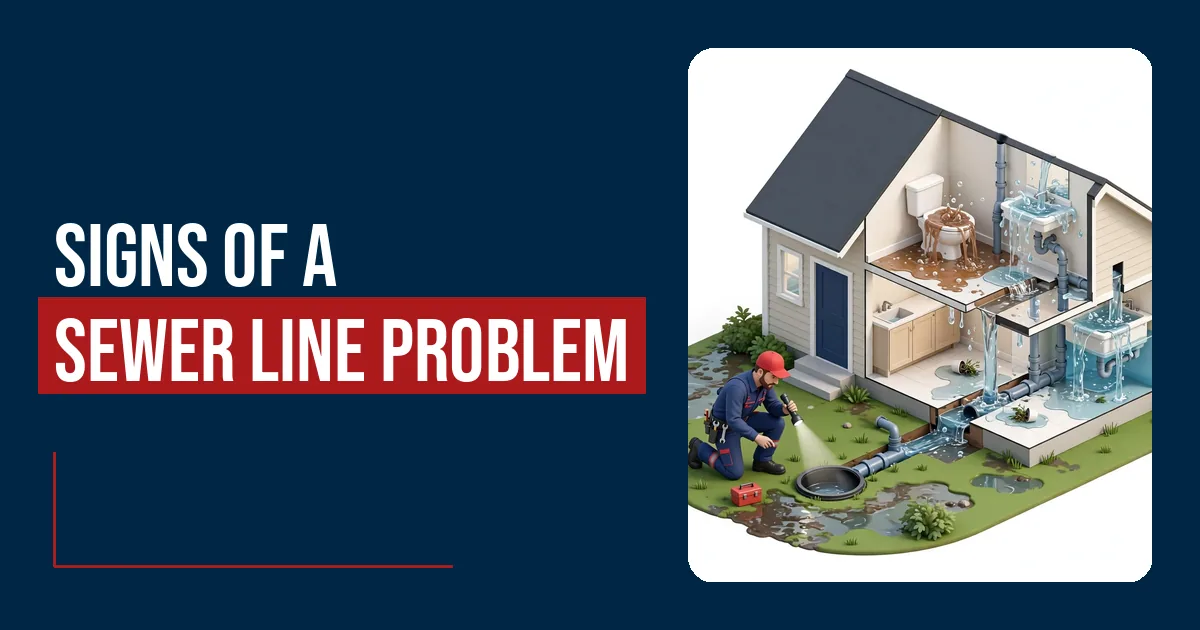
Every fixture drains into branch lines, and every branch line drains into one main sewer line running out to the street. A clog forms in one branch - hair in a shower drain, grease in a kitchen line - and affects only that fixture. A sewer line problem sits in the shared main line, so it affects everything upstream at once.
That one fact explains almost every sign below. When the main line narrows or fails, water from anywhere in the house struggles to leave, air gets pushed back through traps, and wastewater looks for the lowest exit it can find: one fixture misbehaving is a clog; the whole house misbehaving is the line.
The 8 Signs of a Sewer Line Problem
One sign on its own deserves watching; two or more together deserve a call.
Multiple Drains Slow at Once
When several drains run slow simultaneously - the kitchen sink, a bathroom sink, and the tub all sluggish in the same week - it points to a main sewer line blockage, not individual clogs. Separate branch clogs almost never appear at the same time by coincidence.
What it means: the shared line out of the house is narrowing or obstructed.
Sewage Odors Indoors or Outdoors
A rotten-egg or sewage smell inside or outside your home means sewer gas is escaping somewhere it should not - through a cracked pipe, a failed seal, or a vent issue - instead of venting through the roof. A healthy, sealed line produces no odor you can smell.
What it means: gas is leaking from the line, which means wastewater can leak too.
Gurgling Sounds from Drains and Toilets
Gurgling when you flush or run water indicates air trapped behind a blockage or a venting problem in the line. As wastewater pushes past a partial obstruction, it shoves air back through the water in nearby traps - the bubbling toilet or glugging sink you hear. A toilet that gurgles when the washing machine drains is a classic symptom.
What it means: air cannot move freely through the line because wastewater cannot either.
Sewage Backups
Sewage appearing in tubs, toilets, or floor drains means the main line is blocked or collapsed and wastewater is reversing into the lowest fixtures in the house. This is the most serious sign on the list: stop running water, keep people and pets away, and treat it as a plumbing emergency.
What it means: the line can no longer carry wastewater out of the home at all.
Wet, Lush, or Sunken Spots in the Yard
Wet, lush, or sunken areas in your yard - especially over the sewer line - often mean the pipe is leaking underground. Escaping wastewater soaks and fertilizes the soil above the break, so one patch of grass grows greener and faster than the rest while the ground over a collapsing pipe can sink.
What it means: wastewater is leaving the pipe before it reaches the street.
Foundation Cracks and Shifting
A sewer line leaking under or beside a slab washes soil away from beneath the foundation and keeps the ground constantly wet. Over time that lost support can contribute to settling, which shows up as new cracks in the slab, walls, or flooring - and East Texas clay soil, which already expands and shrinks with the seasons, makes a steady leak under the home worse.
What it means: a long-running leak may be undermining the soil your home sits on.
Pest Activity Near Drains
Rodents and insects are attracted to cracked sewer lines. A break gives drain flies, roaches, and even rats a way in and a food source, so unusual pest activity near floor drains or in the yard above the line can signal a broken pipe - especially alongside slow drains or odors.
What it means: there may be an opening in the line that should not be there.
Recurring Clogs That Return After Cleaning
A clog you clear that comes back within weeks is telling you the debris was never the real problem. If the pipe itself has failed - cracked, offset at a joint, bellied into a sag that collects waste, or invaded by roots - waste catches at the same damaged spot and the blockage rebuilds. In Tyler's mature-tree neighborhoods, tree roots in the sewer line are a frequent cause: pine, oak, and sweet gum roots enter joints seeking moisture and grow back after each clearing.
What it means: the pipe, not the clog, is what needs fixing.
Clog or Sewer Line Problem? A Quick Decision Table
The pattern of symptoms separates the two far more reliably than any single sign:
| What You Notice | Simple Clog | Sewer Line Problem |
|---|---|---|
| Fixtures affected | One fixture, in one room | Multiple fixtures, often on the lowest floor first |
| Sounds | Quiet, just slow | Gurgling or bubbling at drains and toilets |
| Smell | Mild odor at the one drain, if any | Sewage odor indoors, outdoors, or both |
| Backups | Water rises only in that fixture | Sewage backs up into tubs, toilets, or floor drains |
| After cleaning | Stays clear | Clog returns within weeks |
| Outside the house | Nothing unusual | Wet, extra-lush, or sunken patches over the line; pests near drains |
| Right response | Plunge it, clean the trap, or book drain cleaning | Camera inspection of the main line |
Why a Camera Inspection Settles It
Symptoms can suggest the problem is in the line, but they cannot show where it is, what caused it, or how much of the pipe is involved - and those answers decide the right repair. A camera inspection removes the guesswork: a plumber feeds a waterproof camera through a cleanout and watches the inside of the line as it travels, so cracks, offset joints, bellied sections, corrosion, and roots all show up clearly, along with exactly where they sit.
Our guide to what a sewer camera inspection shows walks through the footage in detail. The point is simple: you repair what the camera proves has failed, and nothing more. Sometimes it even delivers good news - the pipe is sound and the whole problem is a blockage cleaning can clear.
Seeing Two or More of These Signs?
Pro Plumbers Tyler provides licensed sewer repair in Tyler, TX - starting with an HD camera inspection so you see the problem before you pay to fix it. Available 24/7 for backups and emergencies.
Call (903) 707-8889What Happens Next: Cleaning, Repair, or Replacement
Once the camera shows what is actually wrong, the path forward is usually one of three:
- The pipe is sound and only blocked. If the camera shows a structurally healthy line with a soft blockage or early root growth, professional drain cleaning or hydro jetting clears it and no repair is needed. This is the best-case outcome, and it is common when the line is caught early.
- One section has failed. A single crack, one root intrusion, or one separated joint can usually be repaired on its own - a spot repair, or trenchless lining or pipe bursting where conditions suit - without replacing the whole run.
- The line has failed throughout. A pipe that is corroded along its length, collapsed in several places, or bellied end to end will keep producing clogs and backups no matter how often it is cleaned. At that point replacement is the honest recommendation, and the camera footage shows you exactly why.
Pro Plumbers Tyler serves Tyler, Whitehouse, Lindale, Bullard, Chandler, Noonday, Gladewater, Kilgore, Van, Troup, and all surrounding East Texas communities with camera inspections, drain cleaning, and sewer repair - with upfront flat-rate pricing and 24/7 emergency service when a backup cannot wait.
Frequently Asked Questions About Sewer Line Problems
The earliest signs are usually several drains slowing at the same time, gurgling sounds when you flush or run water, and a persistent sewer odor. A single slow sink is usually a local clog - when multiple fixtures misbehave together, the shared main sewer line is the likely cause.
A simple clog affects one fixture, stays in one room, and usually clears with plunging or cleaning that drain. A sewer line problem affects multiple fixtures at once, causes sewage backups or odors, keeps coming back after cleaning, and may show up outside as wet or extra-lush spots in the yard over the line.
Gurgling means air is trapped behind a blockage or a venting problem in the line and is bubbling back through the water in a trap as wastewater struggles to pass. Occasional gurgling from one fixture can be local, but gurgling at several fixtures - especially a toilet that bubbles when the sink drains - points to the main sewer line.
Cleaning clears what is inside the pipe at that moment. If the pipe itself has failed - cracked, offset, bellied, or invaded by tree roots - waste catches at the same damaged spot and the clog rebuilds. Recurring clogs in the same line are one of the clearest signs the pipe, not the debris, is the problem.
A plumber feeds a waterproof camera through a cleanout and watches the inside of the line on a monitor. It shows the exact cause and location - roots, cracks, offsets, bellies, or a simple blockage - so you repair only what has actually failed instead of guessing. If the pipe is sound, cleaning alone may be all you need.