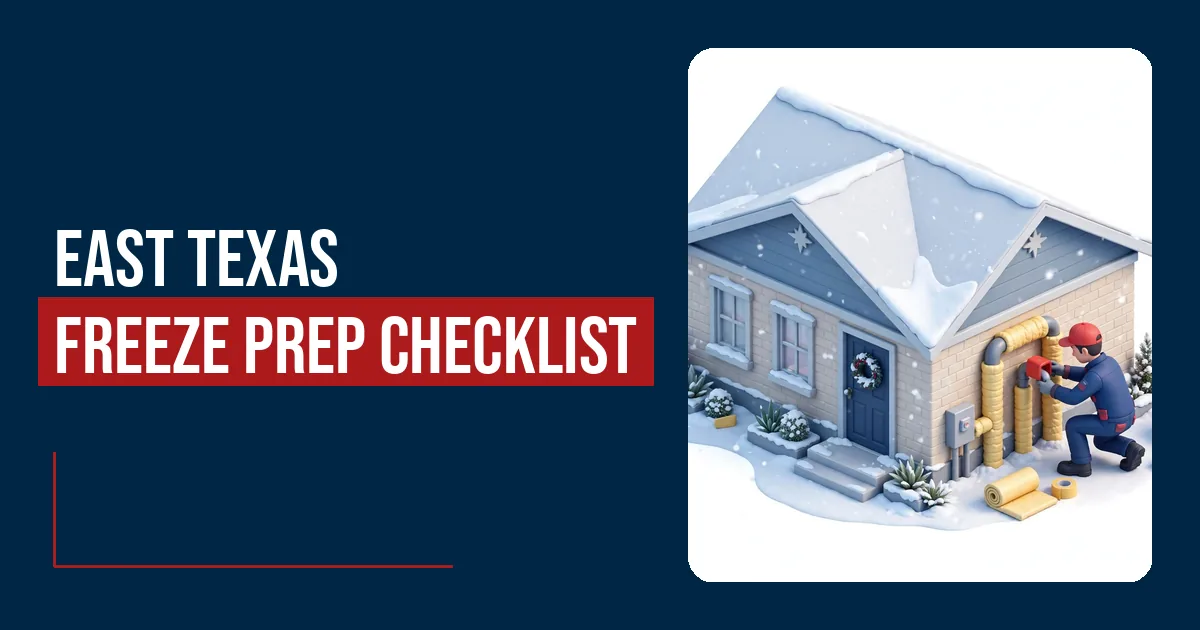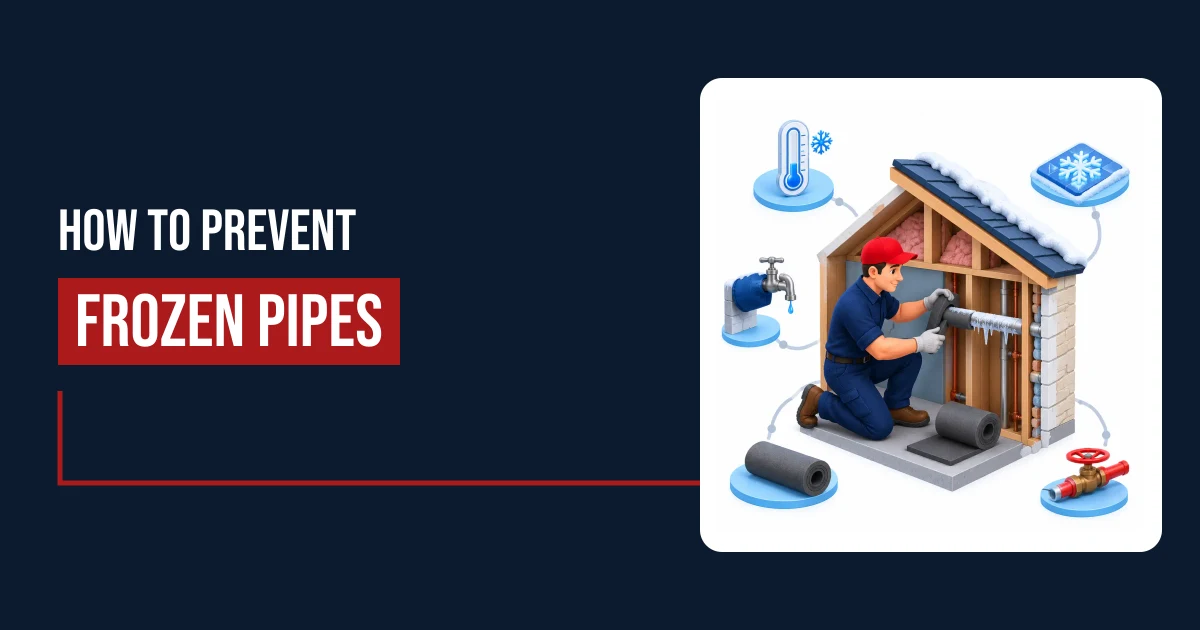
To prevent frozen pipes in an East Texas home, insulate the pipes running through your attic, garage, and exterior walls, disconnect and cover outdoor faucets, let a faucet drip during a hard freeze, keep cabinet doors open so warm air reaches the plumbing, and never let the thermostat drop below 55°F - even when you are away. Knowing where your main water shutoff valve is before a freeze is just as important, because it is your fastest defense if a pipe does burst.
Texas homes are built for heat, not hard freezes. Pipes run through under-insulated attics, garages, and exterior walls that would be buried deep inside the heated envelope of a northern home. When a rare but severe cold snap hits - as Winter Storm Uri did across East Texas in February 2021 - those exposed pipes freeze, the water inside expands, and pipes burst. This guide, from the licensed team at Pro Plumbers Tyler, walks through exactly why East Texas pipes are vulnerable and the practical steps that protect them.
What's In This Guide
Why Pipes Freeze in East Texas
Freezing itself is not what breaks a pipe - pressure is. When water freezes it expands by roughly nine percent, and inside a closed pipe that expansion has nowhere to go. As the ice grows, it pushes a column of pressurized water toward the closed faucet ahead of it. When that pressure exceeds what the pipe or a fitting can hold, the pipe splits - often not at the frozen spot itself, but between the ice and the closed tap.
What makes this a serious problem specifically in East Texas is how our homes are built. In cold-climate regions, water lines are routed through the heated interior and buried below the frost line. Here, builders design for triple-digit summers, so pipes commonly run through spaces that get no heat at all: attics, garages, crawlspaces, and inside exterior walls with minimal insulation. During a normal Tyler winter this is never tested. During a multi-day hard freeze, those pipes sit in air well below freezing for hours at a time.
Which Pipes Are Most at Risk
Not every pipe in your home is equally vulnerable. The ones that freeze first are those exposed to outside air with little or no insulation. Knowing which pipes are at risk tells you exactly where to focus your prevention effort:
Water lines running through the attic sit directly under the roof with cold air on all sides. In many Tyler homes these are the first pipes to freeze.
Garages are unheated and often have a water heater or supply lines along an exterior wall. An open or drafty garage door makes it worse.
Pipes inside walls that face the outdoors - especially kitchen and bathroom sinks on an outer wall - are separated from the cold only by thin insulation and siding.
Homes on a pier-and-beam foundation have supply lines in the crawlspace, where cold air circulates freely underneath the house.
Exterior faucets and any connected garden hose trap water that freezes and cracks the bib - a very common and easily prevented failure.
Irrigation backflow assemblies and pool equipment sit outdoors and are highly exposed. These need their own winterizing before a freeze.
How to Prevent Pipes From Freezing
Most freeze damage is preventable with a handful of low-cost steps taken before the cold arrives. Work through these in order - the early ones protect you all season, and the later ones are your hard-freeze routine.
- Find and label your main water shutoff now. Before any freeze, locate your main shutoff valve (usually where the water line enters the home, in the garage, or at the meter box). Make sure everyone in the household can find and turn it. If a pipe bursts, this valve is your fastest way to stop the flooding. See our guide to shutting off your home's water supply.
- Insulate exposed pipes. Slip foam pipe-insulation sleeves over the runs in your attic, garage, crawlspace, and along exterior walls. These cost a few dollars per length at any hardware store and are the single most effective off-season step you can take.
- Disconnect and cover outdoor faucets. Remove all garden hoses (a connected hose traps water that freezes back into the bib), drain the faucet, and fit an insulated hose-bib cover over each one.
- Winterize sprinkler and pool lines. Shut off and drain irrigation systems and protect any exposed backflow assembly. Pool equipment should be winterized per the manufacturer's guidance.
- Seal drafts near pipes. Caulk or foam gaps where cold air reaches plumbing - around the garage door, foundation vents, and where pipes pass through exterior walls. Keeping the cold air out is half the battle.
- Add heat tape to high-risk runs. For pipes that have frozen before or sit in the most exposed spots, electric heat tape rated for water pipes provides a controllable, thermostatically managed layer of protection.
Before a Hard-Freeze Warning: Your Checklist
When the forecast calls for a hard freeze - a sustained stretch below about 20°F - run through this short checklist the evening before the temperature drops:
| Action | Why It Works |
|---|---|
| Let faucets drip (a slow trickle at the faucet farthest from the main) | Moving water resists freezing, and the open faucet relieves the pressure that actually bursts pipes. |
| Open cabinet doors under kitchen and bathroom sinks | Lets your home's warm air reach the supply lines against exterior walls. |
| Keep the garage door closed | Traps warmth around water heaters and supply lines running through the garage. |
| Keep the thermostat at 55°F or higher, day and night | Maintains enough interior heat to protect pipes in walls and ceilings, even overnight. |
| Open interior doors | Helps heat circulate to rooms with plumbing on exterior walls. |
| Confirm the shutoff works | Test that your main valve turns freely so you can act instantly if a pipe fails. |
Leaving Home During a Freeze
A frozen pipe that bursts while you are away can flood a home for hours or days before anyone notices - which is how a small freeze becomes a major insurance claim. If you will be traveling during a cold stretch, take extra precautions beyond the normal checklist:
- Never set the heat below 55°F. Saving a little on heating is not worth the risk of a burst pipe running unattended.
- For an extended absence during a hard freeze, shut off the main and drain the lines. Turn off the main valve, then open the highest and lowest faucets to let the system drain. Empty pipes cannot freeze and burst.
- Ask a neighbor to check in. Leave them your main shutoff location and a plumber's number so a problem can be caught early.
- Consider a smart leak sensor. Water-leak detectors can alert your phone the moment they sense water, and some connect to an automatic shutoff.
For a complete pre-trip routine any time of year, see our guide on preparing your plumbing before vacation.
What to Do If a Pipe Freezes
If you turn on a faucet during a freeze and only a trickle or nothing comes out, a pipe has likely frozen. Acting quickly - while it is still frozen and before it bursts - can save you from major damage:
- Leave the faucet open. As you thaw the pipe, running water will help melt the remaining ice, and the open tap relieves pressure.
- Apply gentle heat from the faucet end toward the frozen area. Use a hair dryer, a space heater kept clear of anything flammable, or towels soaked in hot water. Work from the open faucet back toward the blockage so melting water can escape.
- Never use an open flame. A blowtorch or propane heater can damage the pipe and is a serious fire risk, especially in an attic or wall cavity.
- If you cannot reach or thaw the pipe, or it has already burst, shut off the main immediately. Then call a licensed plumber.
If a pipe has already burst, treat it as an emergency: shut off the water and follow the steps in our guide on what to do when a pipe bursts, then call for help.
Frozen or Burst Pipe? We Answer 24/7.
Pro Plumbers Tyler provides licensed, insured pipe repair and replacement and 24-hour emergency plumbing across Tyler, TX and East Texas. If a freeze has damaged your plumbing, we respond fast.
Call (903) 707-8889When to Call a Plumber
Freeze prevention is something every homeowner can do. But certain situations call for a licensed plumber - both to fix damage correctly and to keep small problems from becoming expensive ones:
- A pipe has burst or is actively leaking. Shut off the main and call right away - water damage compounds by the minute.
- A pipe is frozen and you cannot locate or safely thaw it. Pipes inside walls and ceilings need professional access.
- Repeated freezing in the same spot. A pipe that freezes every winter needs insulation, rerouting, or heat tape installed correctly.
- You want your at-risk pipes protected before winter. A plumber can insulate exposed runs, add heat tape, and winterize outdoor and irrigation lines properly.
- Low pressure or discoloration after a freeze. These can signal a hidden crack that has not fully failed yet.
Pro Plumbers Tyler serves Tyler, Whitehouse, Lindale, Bullard, Chandler, Noonday, Gladewater, Kilgore, Van, Troup, and all surrounding East Texas communities with licensed pipe repair and replacement and round-the-clock emergency plumbing. Whether you want your pipes protected before winter or you have a burst line right now, our team is ready.
Frequently Asked Questions About Frozen Pipes in East Texas
Pipes are generally at risk once the outside temperature drops to about 20°F (-6°C) or below for several hours. However, poorly insulated pipes in attics, garages, and exterior walls - very common in East Texas homes - can freeze at slightly higher temperatures during a sustained cold snap, especially with wind chill or a power outage that stops your heating.
Yes. During a hard freeze, let a slow trickle run from the faucet farthest from your main shutoff, ideally one served by pipes on an exterior wall. Moving water is much harder to freeze, and the open faucet relieves the pressure buildup that is what actually causes a frozen pipe to burst. A pencil-lead-width stream is enough.
Pipes in unheated or exposed spaces freeze first: attic runs, garage plumbing, pipes in exterior walls, crawlspaces, and outdoor hose bibs. Because East Texas homes are built for heat rather than cold, these pipes often have little or no insulation, which is why insulating them is the most effective prevention step.
Keep the faucet open, and gently warm the frozen section with a hair dryer or space heater, working from the faucet end toward the frozen area so melting water can escape. Never use an open flame. If you cannot locate the freeze, cannot thaw it, or a pipe has already burst, shut off your main water supply and call a plumber.
Yes. Keep the heat set no lower than 55°F, leave cabinet doors open, and for an extended absence during a hard freeze, consider shutting off the main water supply and draining the lines. A frozen pipe that bursts while no one is home causes far more damage before it is discovered - often the most expensive freeze claims of all.
Winter Storm Uri in February 2021 brought days of sub-freezing temperatures to a region whose homes are not built for it - pipes run through under-insulated attics and exterior walls, and prolonged power outages meant no heat. Water froze, expanded, and burst pipes across East Texas. It is the clearest reason freeze prevention has become essential for Tyler-area homeowners.