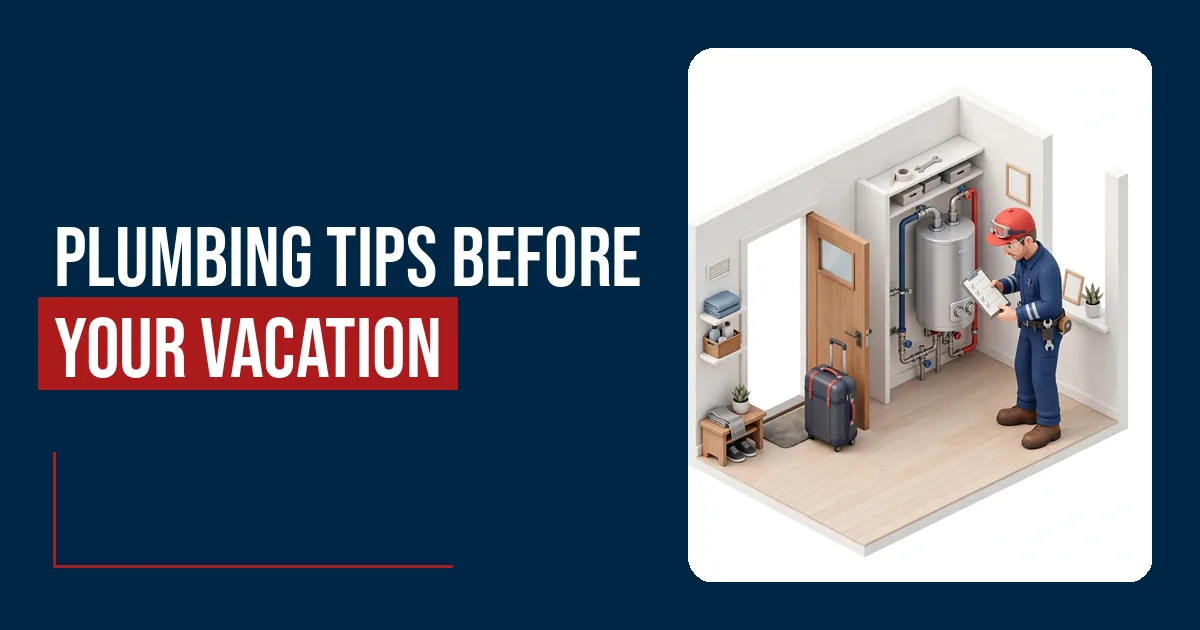
A plumbing leak does not check whether you are home. A supply line that lets go while your house sits empty for a week can do more damage than the same leak caught in an hour - which is why a short pre-trip plumbing routine is one of the cheapest forms of protection a Tyler homeowner can practice. Plumbing tips before going on vacation come down to a simple checklist: decide about your main shutoff, set the water heater correctly, check for small leaks while they are still small, secure outdoor faucets, and know what to inspect the day you return. This guide walks through each step in the order to do them.
None of this takes long. Most of the checklist is a single walk through your house with a flashlight and a dry paper towel, done a day or two before you leave - not in a rush on departure morning.
What's In This Guide
Why Vacation Plumbing Prep Matters
At home, most leaks announce themselves - a drip you hear, a spot you see, a toilet that runs. Away, nobody hears or sees anything, so a minor failure has days to become a major one. The risks are not exotic: a washing-machine hose, a toilet fill valve that sticks, an ice-maker line, an aging water heater. Vacation prep does not eliminate those risks, but a closed main valve limits any failure to the water already in the pipes, and a pre-trip leak check catches slow problems while they are still cheap.
The Pre-Trip Checklist at a Glance
- Decide on the main shutoff - off for longer trips, or fixture valves off for key appliances on shorter ones.
- Set the water heater to vacation mode or its lowest setting, following the unit's own instructions.
- Walk a full leak check - under every sink, behind every toilet, around the water heater, washer, and refrigerator line.
- Check hose bibbs and outdoor faucets - remove hoses, confirm nothing drips, and insulate if cold weather is expected.
- Secure appliances - washing machine and dishwasher valves off if the main stays on; clear drains of standing issues.
- Leave access and information - a trusted person knows the shutoff location and how to reach you.
Decide on the Main Shutoff
For a trip of more than a few days, the strongest protection is turning off the main water supply where it enters the house, then opening a faucet briefly to relieve pressure in the lines. With the main off, no fixture or appliance can flood the house while you are gone. If you have never operated your main valve, read our guide on how to shut off your home's water supply first - it covers where the valve is in Tyler-area homes and how the meter-box shutoff works as a backup.
Two honest exceptions: if something in your home genuinely needs water while you are away - an automatic system you rely on, or a household member or pet sitter staying in the home - weigh that need openly rather than by habit, and consider shutting off only the highest-risk fixture valves instead: washing machine, toilets, and ice maker. And if your main valve is stiff or has not moved in years, do not discover that the night before a trip - test it a week ahead, so a valve problem becomes a planned fix, not a departure-day crisis.
Set the Water Heater to Vacation Mode
There is no reason to keep a full tank of water hot for an empty house. Many gas water heaters have a dedicated vacation setting on the control dial; electric units may simply be set to their lowest temperature or switched off at the breaker, following the manufacturer's instructions for your model. If you have turned the main water off, follow your heater manufacturer's guidance about the unit while the supply is off, and never let a tank run in a way its instructions warn against.
On your return, restore the temperature setting and give the tank time to recover before expecting a normal hot shower. If your heater is older, leaking at its base, or rusting around its fittings, resolve that before a long trip rather than after - a failing water heater is one of the most common sources of vacation water damage we see, and a pre-trip check is the moment to catch it.
Do a Whole-House Leak Check
A day or two before departure, walk the house slowly with a flashlight and check every place water connects or collects:
- Under every sink: run a dry hand or paper towel along supply lines, valves, and the drain trap - even slight dampness matters.
- Behind and around every toilet: check the supply valve, the base seal, and listen for a toilet that refills on its own.
- Around the water heater: look at the base, the fittings, and the drain pan if one is fitted.
- Washing machine hoses: look for bulges, cracks, or corrosion at the connections - hoses are a classic failure point.
- Refrigerator water line and dishwasher connections: small, slow, and easy to miss until they are not.
- Ceilings and walls below bathrooms: any stain, softness, or musty smell deserves attention before you leave, not after.
If the walk turns up active dampness, a valve that weeps, or a stain that is new, that is the moment for professional leak detection and repair in Tyler, TX - a small fix scheduled before a trip is far better than water running unattended for a week. Tell the plumber your departure date so the work can be sequenced honestly around it.
Heading Out Soon? Book a Pre-Vacation Check.
Pro Plumbers Tyler can inspect shutoffs, supply lines, and your water heater before a trip, and fix the small leaks that become big ones in an empty house. Ask about a pre-vacation inspection when you call.
Call (903) 707-8889Hose Bibbs and Outdoor Plumbing
Outdoor faucets are easy to forget because they are outside the daily routine. Before a trip, disconnect garden hoses - a connected hose traps water in the hose bibb, which is exactly what splits the pipe in a freeze - and confirm each bibb closes fully without dripping. If your trip falls in East Texas freeze season, insulate exposed bibbs and any outdoor pipe runs, and remember that an empty house with the heat set very low is at more freeze risk than an occupied one, so keep reasonable heat on in cold weather. In summer, the outdoor check is simpler: no dripping bibbs, no standing water against the foundation, and irrigation, if you run it while away, checked for broken heads or leaks before you go.
Appliances and Drains Before You Leave
If the main valve stays on for any reason, turn off the individual valves for the washing machine and dishwasher - the two appliances whose pressurized hoses and connections cause a large share of empty-house floods. Run the garbage disposal with plenty of cold water before you leave so no food waste sits in it for a week, and avoid leaving the dishwasher or washing machine mid-cycle or loaded with standing water. Finally, pour a little water into any floor drains or rarely used drains in the house: their traps can dry out over a long absence and let sewer odor into the home, and topping them up before you leave is a thirty-second fix.
What to Check When You Return
Coming home deserves the same calm routine, in reverse:
- Walk the house first, before restoring everything. Look and listen for dampness, drips, or damage anywhere - especially under sinks, around toilets, and below ceilings.
- Turn the main water back on slowly, then open faucets gradually to let air clear from the lines without hammering the pipes.
- Restore the water heater setting and allow time for the tank to reach temperature before use.
- Re-open any fixture or appliance valves you closed, and check each connection as pressure returns.
- Run water in rarely used drains and check the water meter: with everything off, a moving meter can point to a leak worth investigating through leak detection rather than guessing.
If anything smells musty, feels damp, or looks stained on your return, do not ignore it because the trip is over. Water that sat for days needs attention promptly, and Pro Plumbers Tyler serves Tyler, Whitehouse, Lindale, Bullard, Chandler, and surrounding East Texas communities with leak detection and repair, 24/7 for emergencies.
Frequently Asked Questions About Vacation Plumbing Prep
For trips of more than a few days, yes - turning off the main supply and relieving line pressure is the strongest protection against an unattended leak. If something in the home genuinely needs water while you are away, shut off the highest-risk fixture valves instead, especially the washing machine, toilets, and ice maker.
Use the vacation setting if your gas unit has one, or the lowest temperature setting, following the manufacturer's instructions for your model. If the main water supply will be off, follow the manufacturer's guidance for the heater during that period. Restore the normal setting when you return and allow the tank time to recover.
Check under every sink, behind every toilet, around the water heater, washing machine hoses, and the refrigerator and dishwasher connections for dampness or drips. Disconnect garden hoses, confirm hose bibbs close fully, and make sure a trusted person knows where your main shutoff is.
A connected hose traps water inside the hose bibb and its pipe. In freezing weather that trapped water can split the pipe, and the leak may only appear when the faucet is next used. Disconnecting hoses and confirming the bibb does not drip removes that risk and a common slow outdoor leak.
Walk the house looking and listening for dampness, stains, or drips before restoring everything. Turn the main water on slowly, re-open fixture valves and check connections as pressure returns, restore the water heater setting, and run water in rarely used drains. A moving water meter with everything off can indicate a leak.
Yes. A pre-vacation inspection can cover your main shutoff, supply lines, appliance connections, hose bibbs, and water heater, and fix small leaks while they are still small. Tell the plumber your departure date when you call so any work found can be sequenced before you leave.