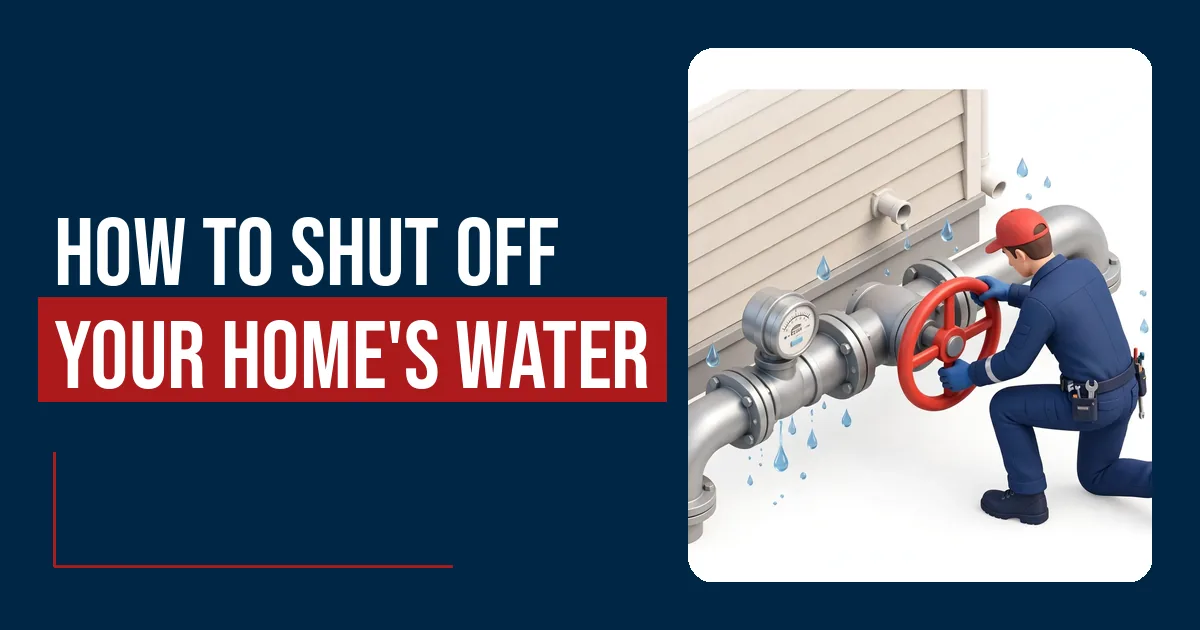
Knowing how to shut off your home water supply is one of the most critical plumbing skills every homeowner, tenant, and landlord should master. During a plumbing crisis—such as a ruptured pipe, failed water heater, or overflowing toilet—every second counts.
A burst pipe can discharge 10 to 20 gallons of water per minute under standard municipal pressure. Knowing where your main shut-off valve is located and how to turn it off can mean the difference between a minor cleanup and tens of thousands of dollars in structural floor, wall, and ceiling damage.
Beyond emergencies, shutting off the water is essential when making plumbing repairs, leaving home for an extended vacation, or preparing your plumbing for severe winter freezing.
Quick Answer: How Do You Shut Off the Water Supply to Your House?
- Locate the main shut-off valve: Look where the main line enters the home (basement, garage, utility room) or inside the outdoor curb meter box.
- Identify the valve type: Determine if you have a round wheel handle (gate valve) or a straight lever handle (ball valve).
- Turn a gate valve: Rotate the wheel clockwise ("righty-tighty") until completely closed. Do not force it.
- Turn a ball valve: Rotate the lever handle a quarter turn (90 degrees) until it is perpendicular to the pipe.
- Verify shut-off: Open a sink or bathtub faucet to confirm water flow completely stops.
- Drain remaining water: Open lowest fixtures to relieve line pressure if repairs or winterization are needed.
- Safeguard your water heater: Switch off power or set controls to pilot if the water will remain off.
In This Guide
- 1. Understand Your Home's Main Water Supply
- 2. Where Is the Main Water Shut-Off Valve in Your House?
- 3. Identify the Type of Main Water Shut-Off Valve
- 4. How to Shut Off the Main Water Supply Step by Step
- 5. How to Turn Off the Water Supply to Your House From Outside
- 6. How to Shut Off Water in Different Types of Homes
- 7. How to Shut Off the Domestic Hot Water Supply
- 8. What Should You Do After Shutting Off the Water?
- 9. How to Turn the Water Back On After Shut-Off
- 10. What If the Main Water Shut-Off Valve Won't Turn?
- 11. How to Prepare Your Home for a Water Emergency
- Frequently Asked Questions About Shutting Off Home Water Supply
- Protect Your Property by Knowing Your Main Water Shut-Off
1. Understand Your Home's Main Water Supply
Water enters your home from either a municipal utility provider or a private well through a single primary underground service line. This pressurized supply line travels into your property and passes through a master shut-off valve before branching out into fixtures, water heaters, and outdoor hose bibbs.
Closing this master valve isolates your entire interior plumbing system from the incoming municipal water main, immediately stopping pressurized water from escaping anywhere in the house.
2. Where Is the Main Water Shut-Off Valve in Your House?
The location of the main valve varies depending on regional building codes, foundation type (slab, crawl space, or basement), and home age. Check these common locations:
- In the Basement: Look near the front foundation wall closest to the street. The shut-off valve is typically located within a few feet of where the supply pipe enters through the concrete wall or floor slab.
- In the Garage: In slab-on-grade homes, the main line often enters through the garage floor. Look near the water heater, water softener loop, or along the lower front wall.
- In a Utility Room or Closet: Look near your indoor water heater, furnace, or washing machine connection boxes.
- In a Crawl Space: Look near the perimeter foundation wall closest to the municipal street main. If accessible, an interior riser valve may be installed just inside the access door.
- Under the Kitchen Sink: In certain older homes and manufactured houses, a master shut-off valve or manifold is located inside the lower kitchen cabinet.
- Outside Near the Water Meter: In many Texas homes, the main shut-off is located outdoors inside an in-ground meter box positioned along the front property line or sidewalk.
3. Identify the Type of Main Water Shut-Off Valve
Residential water systems generally use one of two primary valve types:
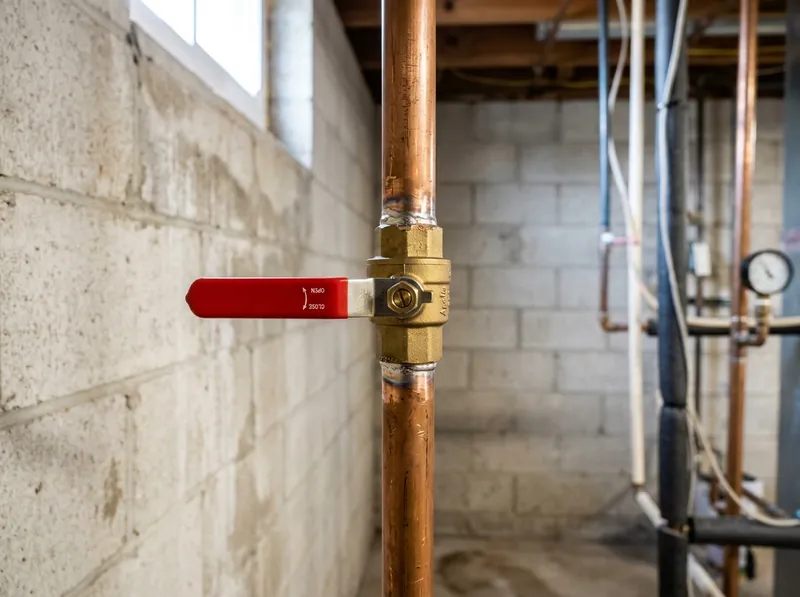
A modern brass ball valve in the closed position: the lever handle sits perpendicular (90 degrees) to the water pipe.
Gate Valve (Round Wheel Handle)
Commonly found in older homes, a gate valve features a round, wheel-shaped handle. Turning the wheel lowers an internal brass wedge into the water channel.
- Hold the wheel firmly and rotate it clockwise several full rotations until it stops.
- Never apply excessive wrench force—aged gate valve stems are prone to seizing or snapping.
Ball Valve (Lever Handle)
Standard in modern plumbing, a ball valve utilizes a straight lever handle connected to a polished stainless steel or brass ball with a central bore.
- Open Position: The lever aligns parallel with the pipe.
- Closed Position: Rotate the lever one-quarter turn (90 degrees) until it is perpendicular to the pipe.
How Can You Tell Whether the Water Valve Is Open or Closed?
For lever ball valves, a perpendicular handle clearly signals that the flow is shut. For round gate valves, turn clockwise until hand-tight; then open an adjacent faucet to verify water flow ceases completely.
4. How to Shut Off the Main Water Supply Step by Step
Follow this systematic 5-step procedure to shut off whole-house water safely:
- Step 1: Locate the Main Valve: Navigate to your identified indoor valve or outdoor meter box. Ensure you have clear, safe footing free from electrical hazards.
- Step 2: Check the Area: Clear away clutter, storage boxes, or dust. If standing water is present near outlets or electrical panels, do not proceed without cutting power first.
- Step 3: Close the Valve: Rotate a gate valve clockwise until snug, or rotate a ball valve lever 90 degrees until perpendicular to the pipe.
- Step 4: Check Water Flow: Turn on a cold-water sink or tub faucet. After a brief burst of residual flow, water should drop to a trickle and stop completely.
- Step 5: Drain Remaining Water: Open faucets at the lowest level (basement, laundry sink, or outdoor spigot) to drain line reservoirs, preventing trapped water from leaking out of damaged pipes.
5. How to Turn Off the Water Supply to Your House From Outside
If your home lacks an interior master valve or the indoor valve is seized, shut off water at the exterior water meter pit:
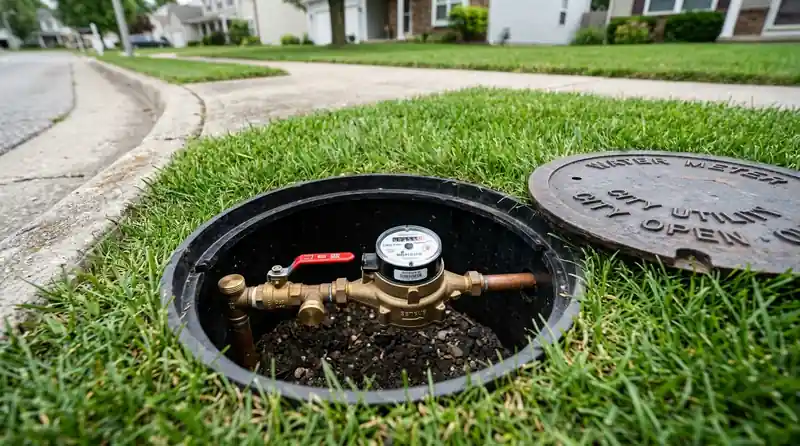
An outdoor residential water meter pit showing the meter dial and the brass customer shut-off valve.
Find the Water Meter Box
The meter box is usually situated near the street curb, sidewalk, or front property boundary. It is housed in a rectangular or circular concrete or composite vault flush with the ground, covered by an iron or plastic lid. Carefully lift the lid using a screwdriver or meter key.
Identify the Customer Shut-Off Valve
Inside the pit, look for the brass valve located on the house side (downstream) of the water meter. Many installations feature a lever or gate handle for homeowner use.
Note on Utility Valves: The brass valve on the street side of the meter typically has an oblong brass tab that requires a T-shaped water meter curb key. While designed for utility technicians, homeowners may use it during life-threatening pipe bursts when no indoor shut-off exists.
6. How to Shut Off Water in Different Types of Homes
- Homes With Basements: Look within two feet of the front exterior wall where the service line penetrates the foundation.
- Homes on Concrete Slabs: Most often found inside the attached garage, the water heater closet, or outside at the meter pit.
- Mobile & Manufactured Homes: Located underneath the mobile home skirting on the water riser pipe, or at an exterior utility connection box. Check your water heater compartment if an interior shut-off manifold is installed.
- Condominiums & Apartments: Look behind an access panel near the water heater, inside the primary bathroom vanity cabinet, or above the laundry hookups. If individual valves are not installed, building maintenance must isolate the floor riser.
7. How to Shut Off the Domestic Hot Water Supply
If a leak is isolated to your water heater or a hot-water fixture, you can shut off the hot water without cutting cold supply to the rest of the home:
- Locate the top of your tank or tankless water heater.
- Identify the cold-water inlet pipe (usually labeled with blue rings or entering on the right side).
- Close the dedicated shut-off valve on this inlet line.
- This halts incoming pressure to the tank, immediately stopping flow to hot taps and hot-water pipe leaks.
Should You Turn Off the Water Heater?
Yes! If cold water supply is shut off and lines are drained, electric water heaters will burn out heating elements in dry tanks. Turn off the 240V breaker for electric units. For gas units, rotate the control knob to "Pilot" or "Off". Review our water heater service guide for maintenance advice.
Can't Shut Off Your Water or Facing a Leaking Valve?
If your main shut-off valve is stuck, corroded, or leaking, our licensed plumbers provide rapid emergency response, valve replacements, and whole-house leak isolation across Tyler, TX.
Call (903) 707-88898. What Should You Do After Shutting Off the Water?
- If You Have a Burst Pipe: Open faucets to bleed pressure, disconnect electricity in wet zones, extract standing water, and read our checklist on what to do when a pipe bursts.
- If You Have a Fixture Leak: Once the master valve is closed, you can close the individual stop valve under the broken sink or toilet, then safely turn the whole-house valve back on to restore service to other bathrooms.
- If Leaving for Vacation: Set your water heater to "Vacation Mode", verify that irrigation systems on dedicated bypasses remain operational, and ensure water softeners do not regenerate while dry.
- If Preparing for Freezing Weather: Drain vulnerable supply lines, open cabinets under exterior sinks, and review our tutorial on preventing frozen pipes.
9. How to Turn the Water Back On After Shut-Off
Restoring water too abruptly can send high-pressure shockwaves (water hammer) through your pipes, loosening joints and damaging faucet cartridges. Follow this safe re-pressurization procedure:
- Step 1: Check All Open Faucets: Close all faucets except one bathtub or utility sink faucet located on an upper level.
- Step 2: Open the Main Valve SLOWLY: Turn the valve handle gradually to allow water to re-enter the plumbing system slowly over 30 to 60 seconds.
- Step 3: Bleed Out Trapped Air: The open faucet will sputter loudly as air pockets escape. Once water flows in a steady, smooth stream, turn that faucet off.
- Step 4: Bleed Remaining Fixtures: Go through the house opening one faucet at a time for 15 seconds until all sputtering ceases.
- Step 5: Check for Leaks: Inspect repaired piping sections, valve stems, and toilet fill valves for signs of weeping or pressure failure.
- Step 6: Restore Water Heater: Ensure the water heater tank is completely full of water before restoring gas or electric power.
10. What If the Main Water Shut-Off Valve Won't Turn?
Gate valves that remain in one position for years accumulate mineral buildup and rust. If your valve resists turning:
- Do NOT Force It: Never use a cheater bar, pipe wrench, or hammer on a stuck valve. Snapping the brass stem will cause an uncontrollable high-pressure deluge inside your home.
- Try Gentle Wiggling: Wear heavy work gloves and attempt gentle clockwise-to-counterclockwise oscillations to dislodge minor mineral scale.
- Locate an Alternative Valve: If the interior valve won't budge, use the outdoor curb meter shut-off.
- Upgrade to a Ball Valve: Have a licensed plumber replace outdated gate valves with a heavy-duty quarter-turn brass ball valve that resists seizing.
11. How to Prepare Your Home for a Water Emergency
- Label the Valve Clearly: Attach a bright yellow or red tag to the main valve handle so anyone in the house can find it in seconds during an emergency.
- Keep the Area Unobstructed: Do not store boxes, shelves, or furniture directly in front of the valve access panel.
- Exercise the Valve Annually: Once a year, turn the valve off and on to keep mechanical seals lubricated and prevent mineral seizure.
- Keep a Water Meter Key Accessible: Store a 5-foot curb key tool in your garage or utility shed if your primary valve is outdoors.
- Install an Automatic Water Leak Detector: Smart shut-off systems automatically close the main supply valve the moment sensors detect uncharacteristic water flow.
Frequently Asked Questions About Shutting Off Home Water Supply
Locate the main water shut-off valve where the water supply enters your home. Turn a gate valve clockwise until fully closed, or rotate a ball valve lever one-quarter turn until it sits perpendicular to the pipe. Open a faucet afterward to confirm that water flow has stopped.
It is commonly found in the basement, garage, mechanical utility room, crawl space, near the water heater, or close to the main foundation entry point. Many homes in East Texas on concrete slabs have an outdoor shut-off located inside an in-ground meter box near the curb.
Most round gate valves close when turned clockwise ('righty-tighty') and open when turned counterclockwise ('lefty-loosey'). Quarter-turn ball valves close when the lever is turned perpendicular (90 degrees) to the pipe.
Yes, in many properties with an outdoor water meter box, there is a customer-side shut-off valve between the meter and the house. However, some curb stop valves require a water meter key tool or are utility-restricted. Contact your municipal water provider if you are unsure which valve is customer-operated.
Yes. When the plumbing system is shut off or drained, electric heating elements can quickly burn out if energized in a partially empty tank. Gas water heaters can overheat or discharge safety valves. Always switch off power to electric units or set gas controls to 'Pilot' or 'Off'.
Opening faucets after closing the main valve is recommended to release residual pressure and drain remaining water out of the pipes. If you are winterizing or repairing lines, leaving them slightly open prevents vacuum lock.
Never force a stuck or corroded valve with excessive leverage, as old stems can snap and trigger an uncontrollable flood. Check for an alternate customer valve at your outdoor water meter, and call a licensed plumber to safely unfreeze or replace the valve.
Locate where the water line enters underneath the structure or near an exterior skirting access point. Find the main shut-off valve on the supply riser, turn it to the closed position, and open an indoor faucet to confirm water has stopped.
Turn off the main whole-house valve to eliminate catastrophic flooding risks while away. Before leaving, turn down your water heater to vacation mode, bypass water softeners or irrigation lines that require independent supply, and test the shut-off a few days before departure.
No. Closing the main valve stops incoming pressurized water, but gallons of water remain trapped inside vertical lines, fixtures, and appliances. You must open lowest-level faucets to actively drain the remaining water.
Ensure all indoor valves and repair points are reconnected. Open one bathtub or cold faucet slightly, then slowly reopen the main valve to allow water to re-pressurize the lines gradually. Let air sputter out before closing faucets, then inspect fittings for leaks.
If the water will only be off for a few minutes and the tank remains completely full under pressure, you may leave it on. However, if lines are drained or the water will be off for an extended period, you must power down the water heater to avoid element burnout or overheating.
Protect Your Property by Knowing Your Main Water Shut-Off
Knowing how to shut off your home water supply gives you immediate control over your plumbing system. Whether dealing with an unexpected burst pipe, an overflowing fixture, or preparing your home for freezing winter weather, closing the main valve stops water damage before it spreads.
Do not wait for a flood to start searching for your valve. Locate it today, make sure everyone in your home knows where it is, and ensure it operates smoothly.
If your main shut-off valve is stuck, leaking, or outdated, have it professionally inspected and replaced before an emergency strikes.
For expert valve replacement, emergency repairs, and trusted service from a licensed plumber in Tyler, TX, Pro Plumbers Tyler is available 24/7 at (903) 707-8889. Also explore our guide on what to do during a plumbing emergency and pipe repair services to keep your plumbing protected year-round.