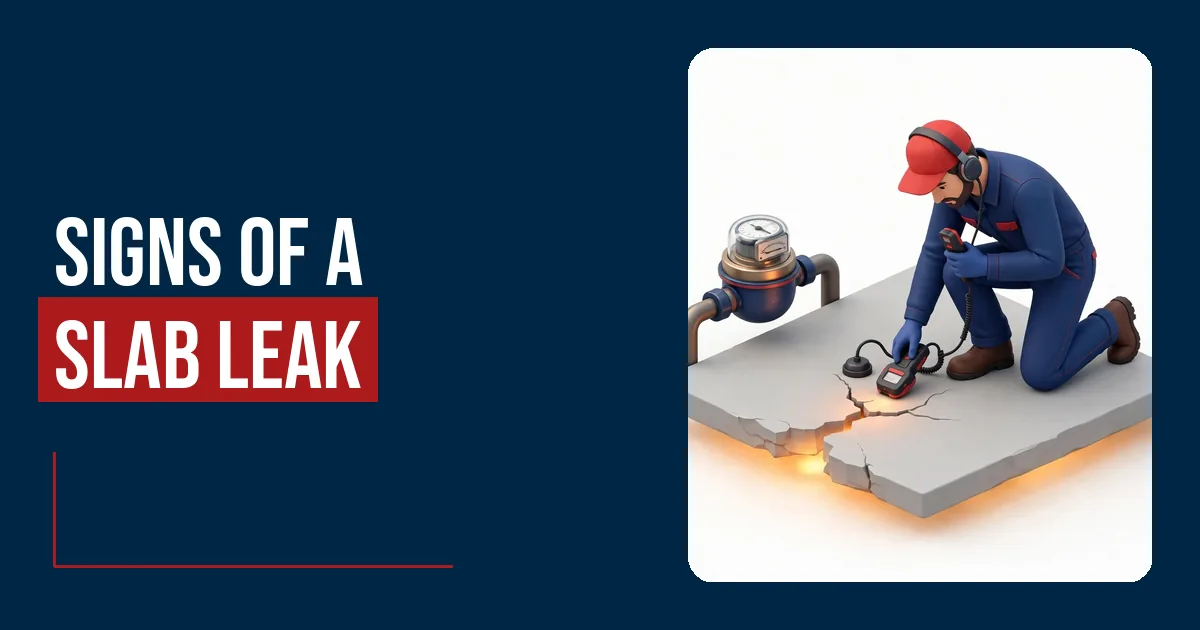
A slab leak is a water or drain line leaking beneath your home's concrete foundation - out of sight, but not without clues. Caught early, it is usually a contained repair. Missed for months, the same leak can undermine soil under the slab, damage floors, and feed mold growth. Tyler homeowners are in a higher-risk area than most: our expansive East Texas clay soil shifts with wet and dry cycles, stressing the pipes buried beneath slabs. Here are the seven signs to watch for, why slab leaks happen here, and how professional detection confirms one.
What's In This Guide
7 Signs of a Slab Leak
Your Water Bill Climbs for No Reason
A pressurized line leaking under the slab runs around the clock. If your bill rises while your household's water use has not changed, water is going somewhere - and under the foundation is a prime suspect.
A Warm Spot on the Floor
A leaking hot-water line warms the slab and the flooring above it. A patch of tile, wood, or carpet that feels noticeably warmer than the surrounding floor - especially barefoot - is one of the most telling slab leak signs there is.
The Sound of Running Water When Nothing Is On
Turn off every faucet, appliance, and toilet, then listen. A faint hiss or running-water sound with everything off suggests water moving through a line that should be still.
Your Water Meter Keeps Moving
With all water use stopped, check your meter. If the dial or leak indicator still turns, water is leaving the system somewhere. This simple test separates "we use a lot of water" from "we are losing water."
Damp Floors, Warped Wood, or Musty Odors
Moisture wicking up through the slab shows up as damp carpet padding, cupping or buckling hardwood, loose tiles, and a persistent musty smell that cleaning never quite removes. Mold growth along baseboards belongs on this list too.
Cracks in Floors, Walls, or the Foundation
Water escaping under a slab washes out and softens the soil supporting it. As support shifts, you may see new cracks in tile, drywall, brick, or the slab edge itself - the leak is no longer just a plumbing problem, it is starting to move the house.
Low Water Pressure or Puddles Around the Foundation
A significant leak can drop pressure at your fixtures. Outside, unexplained soggy ground or puddles along the foundation - in dry weather, with no irrigation running - can mark where the water is surfacing.
Why Slab Leaks Happen in East Texas
Clay soil movement. East Texas clay expands when wet and shrinks when dry. That seasonal movement flexes and stresses pipes beneath and within the slab year after year, until joints loosen or pipe walls fatigue and fail.
Aging copper lines. Many Tyler homes built decades ago have copper water lines under the slab. Over time, water chemistry and soil contact corrode copper from the outside or inside, producing pinhole leaks that start small and grow.
Installation and abrasion. A pipe that rubs against concrete or a rock with every pressure change can wear through at one spot. Poorly soldered joints from original construction can also let go decades later as soil shifts around them.
How Professional Detection Works
Detection is non-destructive first: pressure testing confirms a line is losing pressure, acoustic listening equipment hears the leak through concrete, and line tracing maps where pipes actually run under your home. Isolation tests separate a water-line leak from a drain-line issue or a leaking fixture above the slab. Only after the spot is confirmed does anyone discuss opening anything - and then only at the marked location. Read how detection fits into overall pricing in our guide to slab leak repair cost in Tyler, TX.
Seeing Two or More of These Signs?
Pro Plumbers Tyler locates slab leaks with professional detection equipment before any repair is discussed - one upfront, flat-rate quote, and 24/7 availability across Tyler and East Texas.
Call (903) 707-8889Repair Options Overview
Once located, most slab leaks are resolved one of three ways. A spot repair opens the slab directly above the leak and fixes the damaged section - best for a healthy pipe with a single failure. A reroute abandons the leaking underground section and runs a new line overhead instead - often smarter for aging copper that has leaked before. Tunnelling reaches the pipe from outside the home, protecting finished interior floors. Your plumber should evaluate all three against your pipe's condition and your floors, which is the approach on our slab leak repair service page.
What to Do If You Suspect a Slab Leak
Do not wait for the signs to multiply. A slab leak does not heal, and the water escaping under your foundation keeps working the whole time - softening soil, feeding mold, and raising your bill every single day. A few calm steps protect your home while you get help:
- Confirm the meter test. Turn off every tap and appliance, then check whether the water meter still moves. A moving meter with everything off is strong evidence of a leak somewhere in the system.
- Note the signs you have observed. Warm spots, sounds, damp areas, bill changes - write down where and when. This genuinely helps the detection process go faster.
- Protect flooring and belongings. Move furniture and stored items away from damp areas, and keep the affected rooms ventilated.
- Know where your main shutoff is. If water damage suddenly accelerates - soaked flooring spreading, a musty wall bowing - shutting off the home's water supply stops the leak's fuel until help arrives.
- Call for detection, not demolition. The first visit should locate the leak with equipment and testing. Any repair conversation comes after the location is proven.
Homeowners sometimes delay because they picture the worst version of the repair - the whole floor torn up. Modern detection and the repair routes described above exist precisely to avoid that: the work is targeted at one confirmed spot, or routed around the slab entirely. The expensive version of a slab leak is almost always the one that was ignored the longest.
Frequently Asked Questions About Slab Leaks
An unexplained rise in the water bill is usually the first clue, followed by a warm spot on the floor when the leaking line carries hot water. Either one alone deserves attention; together, they strongly suggest a slab leak.
East Texas clay soil expands and shrinks with moisture cycles, flexing the pipes under slabs until joints and pipe walls fail. Combined with aging copper lines in many older Tyler homes, that soil movement makes slab leaks a recurring local problem.
Yes - detection itself is non-destructive. Pressure testing, acoustic listening equipment, and line tracing pinpoint the leak through the slab. Floors are only opened afterward, at the confirmed location, if the chosen repair route requires it.
Do not ignore one. A slab leak wastes water continuously, can erode the soil supporting your foundation, damages flooring, and encourages mold. The earlier it is located and repaired, the smaller the job tends to be.
The three main options are a spot repair through the slab at the leak point, a reroute that replaces the underground section with a new line run overhead, and tunnelling in from outside to protect interior floors. Pipe condition, leak location, and flooring determine which fits best.