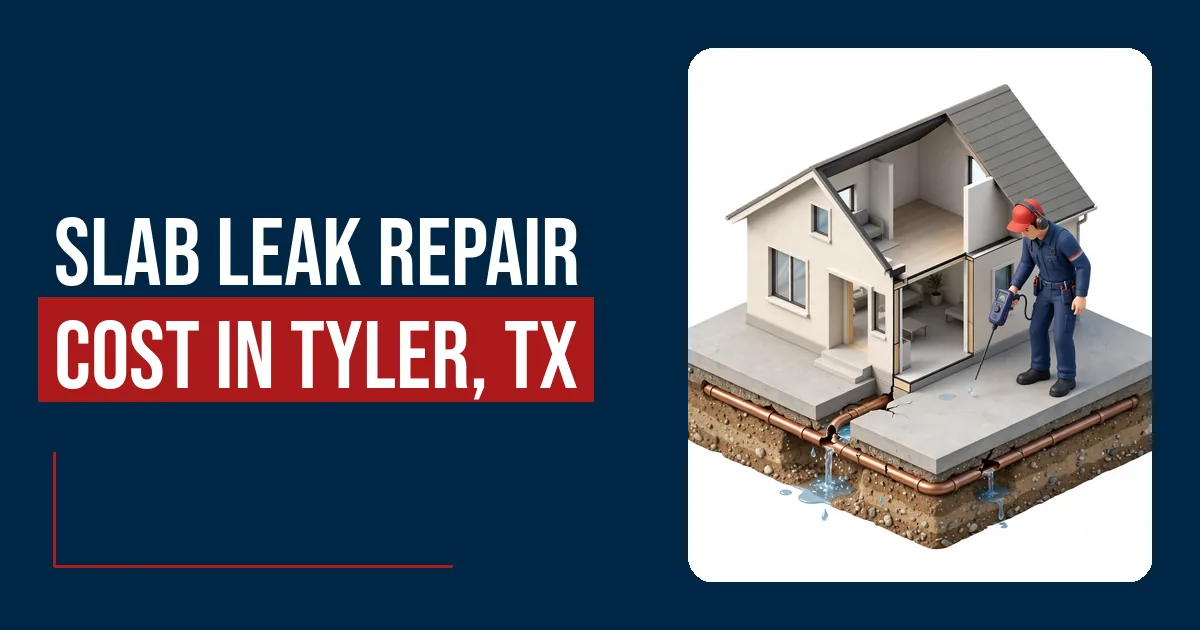
A slab leak repair in Tyler, TX does not have one fixed price, because the final cost is driven by where the leak sits under your foundation, how it is found, and which repair route your home actually needs. Two homes on the same street can face very different jobs: a leak near the edge of the slab is a different project from one under a tiled bathroom in the middle of the house. This guide explains every factor that shapes the cost - honestly, and without a made-up number - so you can judge any quote you receive and ask the right questions before work begins.
Pro Plumbers Tyler provides upfront, flat-rate pricing: once we have located the leak and evaluated the repair options, you approve one clear price before work starts. Until then, the factors below are what your plumber is weighing - and what you should expect them to explain.
What's In This Guide
Factor 1: Where the Leak Is Located
Location is the single biggest cost driver. A leaking line near the perimeter of the slab, under a garage, or close to an exterior wall is far easier to reach than a leak under the center of the home, beneath hardwood, tile, or a kitchen island. Access also matters: flooring that must be opened and later restored, cabinetry in the way, and how much working room the repair needs all change the scope of the job.
The type of line matters too. A pressurized water line leak behaves differently from a drain line leak under the slab, and each calls for different testing and repair methods. This is why a responsible plumber will not quote a slab leak over the phone - the location has to be confirmed first. If you suspect a leak, start with the warning signs in our guide to slab leak signs Tyler homeowners should watch for.
Factor 2: Leak Detection Comes First
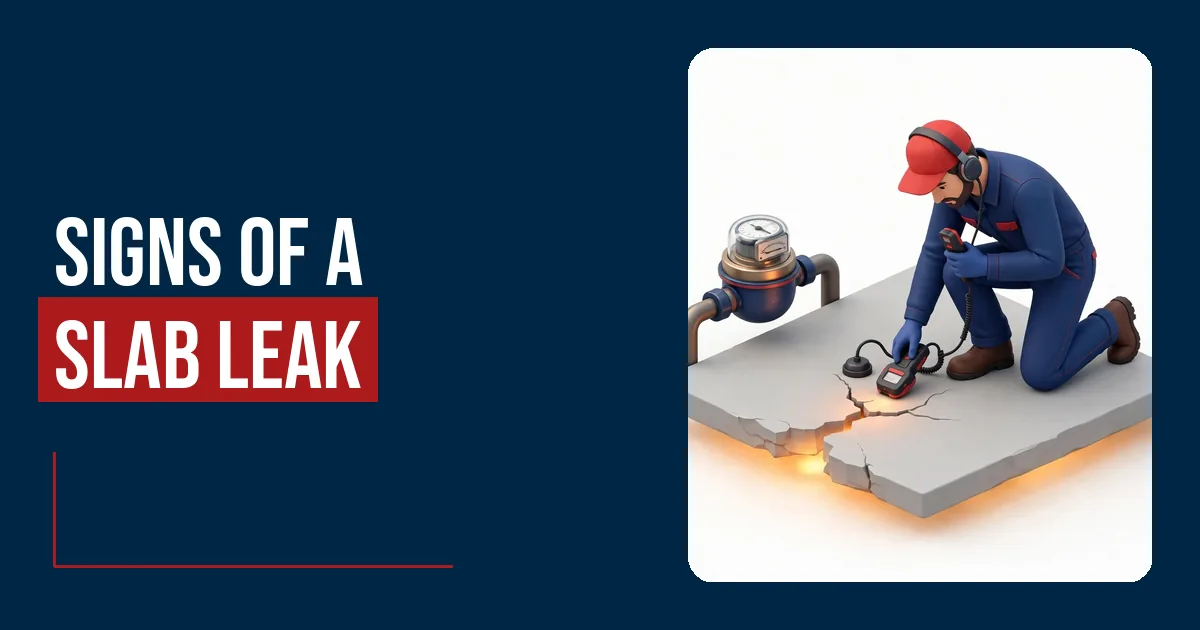
Before any repair, the leak must be pinpointed. Guessing leads to unnecessary demolition - opening concrete in the wrong place helps no one. Professional leak detection and repair in Tyler, TX uses listening equipment, pressure testing, and line tracing to narrow the leak to a specific spot, so only the area that truly needs opening is disturbed.
Detection is a real part of the overall cost, but it protects the rest of your budget: an accurate location can be the difference between one small opening and several exploratory ones. Ask any plumber whether detection is included in their process and how they confirm the spot before breaking ground or concrete.
Factor 3: The Repair Route - Three Evaluated Options
Once the leak is located, there are three main repair routes. A good plumber evaluates all three against your home instead of defaulting to one:
| Repair Route | How It Works | Often Fits When |
|---|---|---|
| Spot repair | The slab is opened directly above the leak and the damaged section of pipe is repaired or replaced. | The pipe is otherwise in good condition and the leak is in an accessible spot. |
| Reroute | The leaking underground section is abandoned and a new line is run overhead or around the slab instead. | The pipe is aging, has leaked before, or access through the slab would be highly disruptive. |
| Tunnelling | A tunnel is dug from outside the home to reach the pipe from beneath the slab, without opening interior floors. | Interior flooring is valuable or newly finished and exterior access is practical. |
Each route trades labour, materials, and restoration differently. Spot repair concentrates work in one place but includes floor restoration. A reroute avoids the slab entirely but involves new piping runs and wall or ceiling access. Tunnelling protects your floors but is labour-intensive digging. The right choice depends on pipe condition, leak position, and your flooring - which is exactly why the evaluation step matters. Our slab leak repair service in Tyler, TX walks through these options with you before any work is approved.
What Professional Leak Detection Includes
- Pressure testing to confirm a pressurized line is actually losing pressure.
- Acoustic listening with sensitive equipment to hear the leak through the slab.
- Line location and tracing so the pipe route under the home is mapped, not guessed.
- Isolation testing to separate water-line leaks from drain-line and other sources.
- A marked location and repair evaluation - the spot, the options, and a flat-rate quote for the route you choose.
For the full picture of how pricing is built across common jobs, see our plumbing cost guide.
Insurance Questions to Ask
Homeowners insurance sometimes helps with parts of a slab leak job - and sometimes does not. Policies differ, so ask your insurer these questions directly:
- Does my policy cover water damage caused by a plumbing leak under the slab?
- Does it cover the access work - opening and restoring the floor or concrete - needed to reach the leak?
- Is the pipe repair itself covered, or only the resulting damage?
- What documentation do you need from my plumber - photos, detection reports, or invoices?
- How does my deductible compare with the covered portion of the job?
Suspect a Slab Leak? Get It Located First.
Pro Plumbers Tyler pinpoints leaks before anyone talks repair routes - then gives you one upfront, flat-rate price for the option you approve. Serving Tyler and East Texas, day or night.
Call (903) 707-8889Questions to Ask Your Plumber Before Approving a Repair
- How was the leak located? You want equipment and testing, not a guess.
- Which repair routes did you evaluate, and why is this one best for my home?
- Is the price flat-rate and complete - including opening, repair, and closing the access point?
- What condition is the rest of the line in? An aging line may make a reroute smarter than a spot repair.
- What happens if the leak turns out to be somewhere else once opened?
Frequently Asked Questions About Slab Leak Repair Cost
Because the cost depends on facts nobody can know without testing: where the leak is under the slab, which line is leaking, and which repair route fits your home. A phone number given without detection is a guess, and guesses are how slab jobs grow mid-project. Accurate detection comes first, then a flat-rate quote.
The leak's location and accessibility, the detection work needed to pinpoint it, the repair route chosen - spot repair, reroute, or tunnelling - the condition of the surrounding pipe, and the floor or surface restoration involved. Each home combines these differently, which is why prices vary so much from house to house.
Neither is automatically better. A spot repair suits a healthy pipe with one isolated leak in an accessible place. A reroute suits an aging line, a pipe that has leaked before, or a leak where opening the slab would be very disruptive. The right answer comes from evaluating pipe condition and access in your specific home.
It depends on the policy. Many policies cover resulting water damage and sometimes the access work needed to reach the leak, while excluding the pipe repair itself - but this varies widely. Ask your insurer the specific questions listed in this guide and get your plumber's detection findings in writing.
Professional detection typically includes pressure testing, acoustic listening equipment, line tracing, and isolation tests to confirm exactly which line is leaking and where. The goal is a marked, confirmed location so only the necessary area is opened during repair.