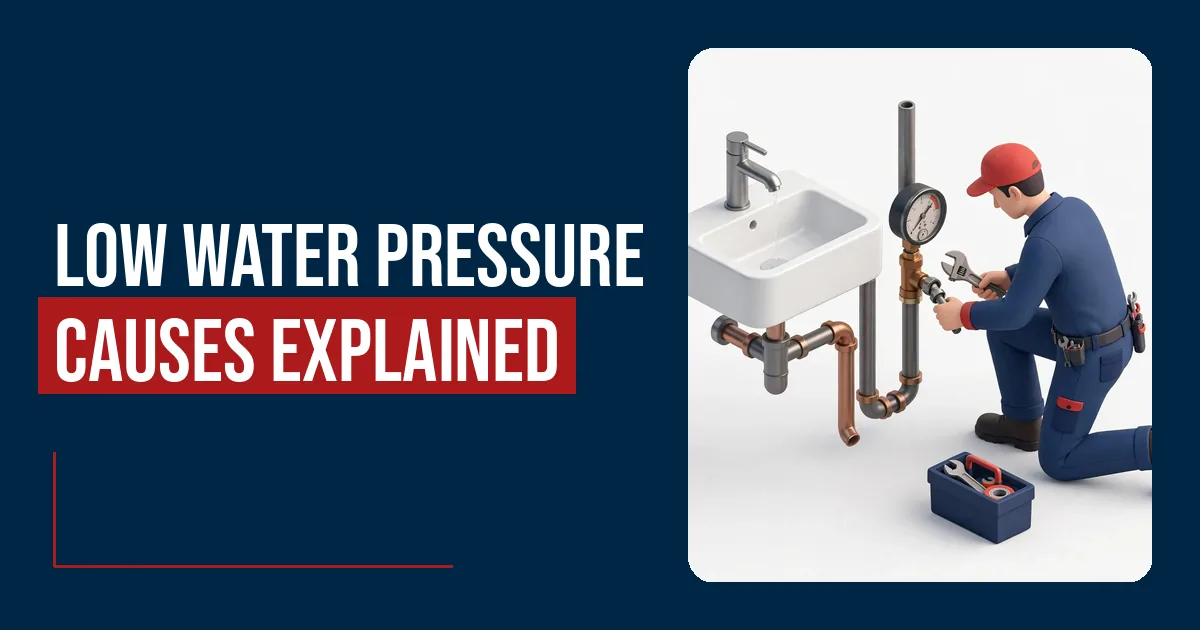
Low water pressure has six common causes, and they split into two groups: the simple ones you can check in minutes, and the ones that mean trouble - a failing main line or a hidden leak quietly damaging your home. This guide walks through all six, shows you how to tell which group yours is in, and states the healthy pressure range plainly so you know what "normal" actually is for a Tyler, TX home.
Pro Plumbers Tyler tests pressure on every leak detection call, because pressure and leaks are two sides of the same system. The framing below is the same one our technicians use in the field.
What's In This Guide
What Healthy Water Pressure Looks Like
As our leak detection page states, between 40 and 80 psi is the safe, healthy range for a home's pipes. Above 80 psi, code requires a pressure-reducing valve (PRV), because excessive pressure accelerates pinhole formation, stresses joints, and shortens water heater life. In the healthy middle of that range, showers are strong, appliances fill promptly, and multiple fixtures can run at once without one starving the other.
That range matters for diagnosis in both directions. Pressure that reads low on a gauge confirms a supply-side or system problem; pressure that reads normal while one shower still feels weak proves the problem is local to that fixture or its line. A two-minute gauge test at an outside hose bib separates guesses from facts, which is why it is step one on a professional call.
The 6 Causes of Low Water Pressure
Aerator and Showerhead Scale (Simple)
The most common cause of all - and the most local. Tyler's hard water deposits mineral scale in the tiny screens of faucet aerators and showerheads until flow chokes down to a trickle. It affects one fixture at a time, which is your clue. Unscrew the aerator, clear or soak out the debris, and the fixture usually returns to full flow.
A Partially Closed or Failing Valve (Simple)
A main shutoff or meter valve that was not fully reopened after past work, or a PRV that is failing or set too low, throttles the whole house at one point. Because the cause sits at a single valve, the fix is at a single valve too.
Corroded, Scale-Narrowed Pipes (Gradual)
Old galvanized pipe rusts from the inside and hard-water scale coats any aging line, narrowing the passage year by year. The signature is pressure that was fine years ago and fades slowly, worst at the fixtures furthest from the main. This is a pipe-condition problem - the long-term answer is pipe repair or replacement of the affected runs.
A Municipal Supply Issue (Not Yours)
City main work, a break in the neighborhood, or peak-demand hours can drop pressure for the whole street. The test is simple: if your neighbors have it too, the cause is upstream of your meter and the city is the call, not a plumber.
A Failing Main Water Line (Trouble)
The line from the meter to your home can crack, corrode, or be crushed by roots and shifting East Texas clay soil. Water escapes before it ever reaches the house, so every fixture weakens together. Wet spots in the yard along the line's path and a rising bill complete the picture. This is water line repair or replacement territory.
A Hidden Leak Inside the Home (Trouble)
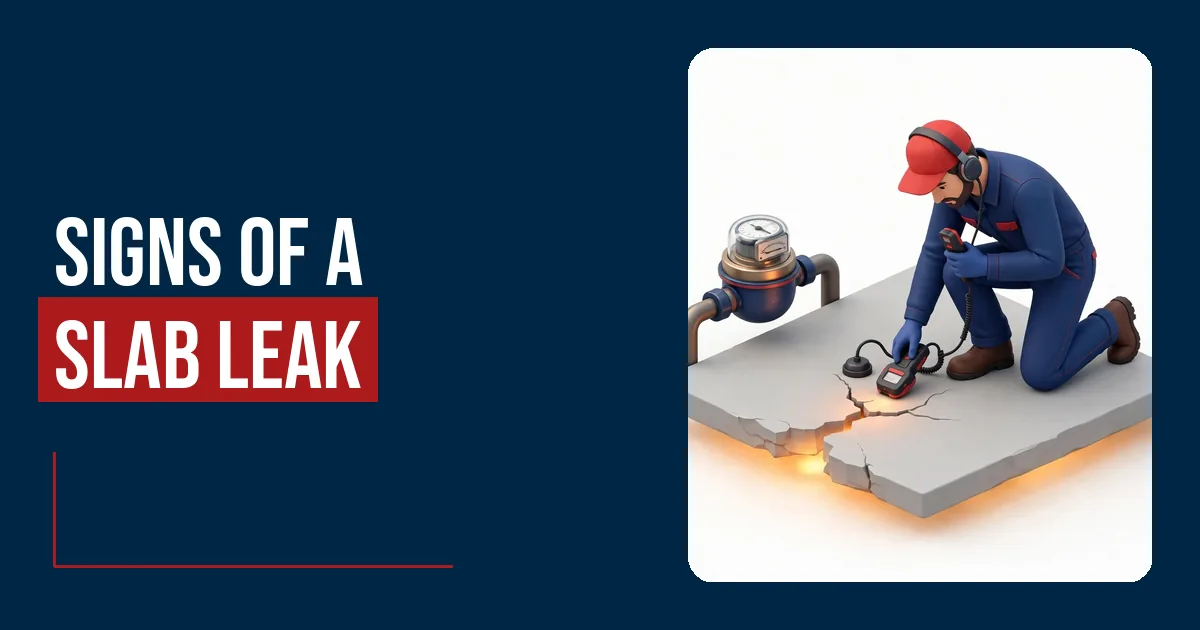
A leak in a wall, under the slab, or in a crawl space diverts water silently. Pressure drops, the meter keeps turning with every fixture off, and the water is going somewhere damaging - into framing, flooring, or the soil under your foundation. This is the cause that makes low pressure urgent.
The Causes That Mean Trouble
Causes 5 and 6 deserve their own warning, because unlike an aerator, they get worse while you wait - and they bill you twice: once in wasted water, once in damage. Treat low pressure as a leak warning when it arrives with any of these companions:
- A water bill that jumped without a change in your usage habits.
- A meter that moves with everything off - the simplest home leak test there is.
- The sound of running water when no fixture is open.
- Damp spots, warm patches on the floor, or musty odors - water appearing where it should not be.
- A soggy or unusually green strip of yard between the meter and the house.
Low Pressure Plus a High Bill? Get It Tested.
Pro Plumbers Tyler pressure-tests and leak-checks homes across Tyler, TX - we find whether your low pressure is an aerator, a valve, your main line, or a hidden leak.
Call (903) 707-8889Simple Checks Before You Call
- One fixture or all of them? One weak fixture points to its aerator or valve. Every fixture weak points to the system - valve, PRV, main line, or leak.
- Clean the aerator on the worst faucet and retest. In Tyler's hard water this alone resolves a large share of complaints.
- Check the main shutoff and PRV - confirm the main valve is fully open; if a PRV is fitted and the whole house is weak, note it for the plumber rather than adjusting blindly.
- Do the meter test. Turn everything off, then watch the meter. Movement with no water in use means water is escaping somewhere.
- Ask a neighbor. Same problem on the street means the supply; your house alone means your system.
Pro Plumbers Tyler serves Tyler, Whitehouse, Lindale, Bullard, Chandler, and surrounding East Texas communities with pressure testing, leak detection, and water line repair - 24/7 when the cause turns out to be a leak that cannot wait.
Frequently Asked Questions About Low Water Pressure
Between 40 and 80 psi is the healthy range - that is the range our own leak detection team works to. Above 80 psi, code requires a pressure-reducing valve, because high pressure stresses joints, accelerates pinhole leaks, and shortens water heater life. Below that range, showers weaken and appliances fill slowly, and the cause is worth finding.
A single weak fixture almost always has a local cause - most often the aerator, the small screen at the faucet tip, clogged with mineral scale from hard water. Unscrew it, rinse or soak out the debris, and flow usually returns. If the aerator is clean and one fixture still lags, the problem is in that fixture's valve or supply line.
Yes - it is one of the causes that mean trouble. A hidden leak, especially in the main line or under the slab, diverts water before it reaches your fixtures, so pressure drops while the meter keeps running. Low pressure that arrives with a higher bill, a meter that moves with everything off, damp spots, or the sound of running water is a leak until proven otherwise.
A sudden drop points to an event rather than wear: a partially closed or failing valve, a pressure-reducing valve failing, work on the municipal supply, or a main line that has cracked or begun leaking. Sudden changes deserve prompt attention - gradual decline is usually pipe condition, sudden decline is something that happened.
A quick test separates them: ask whether the drop is at every fixture including an outside hose tap, and check whether neighbors see it too. Whole street - the supply side, call the city. Only your home, at every tap - the cause is between the meter and your fixtures, which is a plumber's job, starting with a pressure test at the hose bib.