If you live in Lindale, hard water is not a possibility - it is the starting condition. Lindale sits on the Carrizo-Wilcox aquifer, and most of the town is served by Lindale Rural Water Supply, a member-owned, non-profit system covering roughly 11,400 residents. That aquifer water passes through dissolved limestone and dolomite on its way to your tap, picking up the calcium and magnesium that make water "hard." This guide explains what that water does inside a Lindale home - especially one with older pipes - and what actually works against it. For the full local picture, see our Lindale, TX plumber page.
Hard water is the single most common factor behind the calls we take in Lindale: scale inside water heaters, white crust on fixtures, and softeners that stop regenerating properly. Understanding the source tells you which defense fits your home.
What's In This Guide
Why Lindale Water Is Hard
Groundwater changes as it moves. Rainwater filtering down into the Carrizo-Wilcox aquifer dissolves limestone and dolomite along the way, and those minerals stay dissolved until the water is heated, evaporates, or sits still - at which point they precipitate out as scale. That is why the same water that runs clear from the tap leaves white crust on a showerhead and rock-like buildup inside a water heater tank.
Because the source is geological, hardness in Lindale is consistent year-round rather than seasonal. Treatment at the home - not waiting for the supply to change - is the only real answer.
What Hard Water Does to Older Pipes
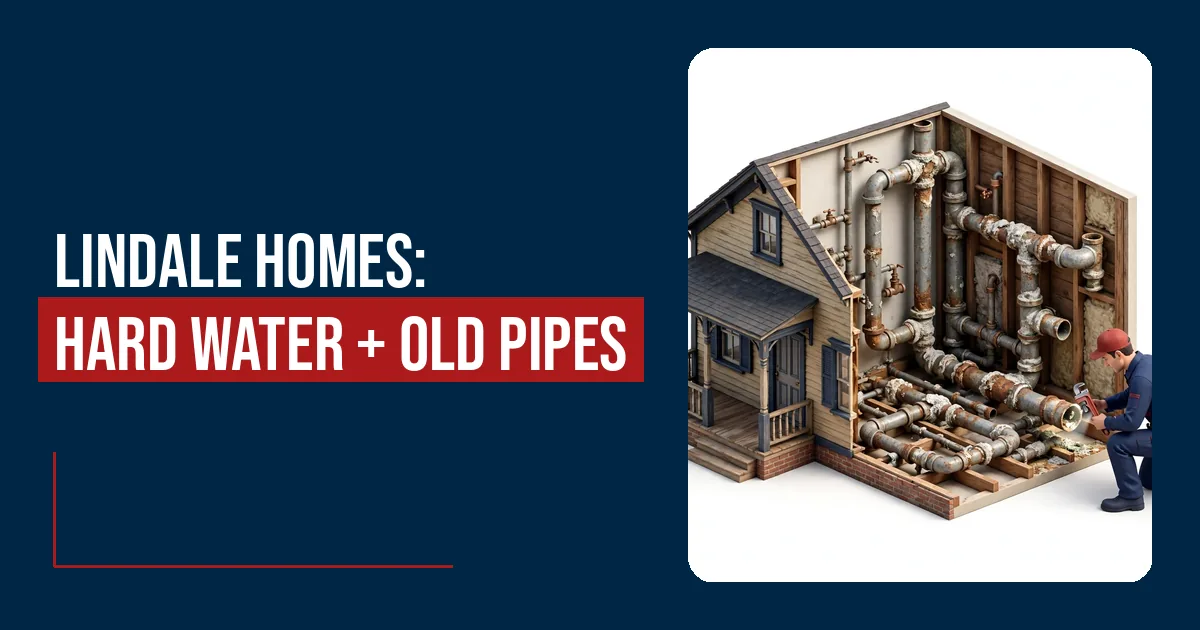
Scale builds where water is hottest and slowest. In older Lindale homes, that creates a compounding problem: mineral layers narrow already-aging pipes, rough interior surfaces catch more scale, and flow drops a little more each year. The effects we see most:
- Water heaters failing early - sediment insulates the tank bottom, forcing longer burner runs and rumbling "kettling" sounds.
- White crust on fixtures and aerators - the visible tip of what is also happening inside valves and supply lines.
- Gradual pressure loss - scale narrowing older galvanized sections from the inside.
- Shorter appliance life - dishwashers, washing machines, and ice makers all suffer scaled valves and clogged screens.
Our guide to hard water's effects on East Texas homes goes deeper on the fixtures-and-appliance damage; the pipe side is what turns a nuisance into a repiping conversation if it is ignored for decades.
There is also an order to how Lindale homes feel it. The water heater usually shows symptoms first - rumbling, slower recovery, rusty hot water - because it concentrates heat and sediment in one place. Fixtures come next, as aerators and cartridges crust up. The pipes themselves are last and slowest, which is deceptive: by the time pressure loss is obvious at the tap, the buildup inside older lines has been accumulating for many years. That sequence is actually good news for homeowners who act early - treating the water and flushing the heater protects the pipes long before the expensive stage arrives, and a home that starts softening now rarely needs the repiping conversation at all.
City Water vs. Private Well: Different Problems
Step outside the Lindale Rural Water Supply area and the picture changes. Plenty of Lindale properties on larger acreage tracts run on private wells rather than the rural water system, and wells bring their own pattern - iron staining on fixtures and laundry, sediment clogging aerators, and pressure tanks that need attention before anyone blames the pipes.
The Homeowner's Defenses
- Soften the water at entry. A properly sized water softener and filtration system removes hardness minerals before they reach heaters and fixtures - the only defense that protects the whole house at once.
- Flush the water heater regularly. Draining sediment keeps the tank efficient and quiet, and dramatically extends its life in hard-water service.
- Clean aerators and showerheads. A vinegar soak dissolves surface scale and restores flow while you assess the bigger picture.
- Watch the softener, not just the water. A softener that stops regenerating fails silently - the water just gradually goes hard again (see the signs below).
- For well homes: test before treating. Iron, sediment, and hardness each need different treatment; a water test prevents buying the wrong system.
Signs Your Softener Has Quit
Because softeners fail gradually, Lindale homeowners often notice the symptoms before the cause: spots returning to glassware, soap that stops lathering, scale crust reappearing on fixtures, and laundry feeling stiff again. Check the salt level and whether the unit is cycling; if it is not regenerating, the whole house has been running on hard water - possibly for months - while the heater quietly accumulated sediment.
When to Call a Plumber in Lindale
Call when pressure keeps dropping, when the water heater rumbles or runs out of hot water faster than it used to, when a softener stops cycling, or when a well home shows iron staining or sediment that a filter change does not fix. Pro Plumbers Tyler installs and services water filtration and softeners across Lindale - call (903) 707-8889 for an upfront flat-rate quote.
Hard Water Problems in Lindale, TX?
Pro Plumbers Tyler tests, installs, and services softeners and filtration sized for Lindale's aquifer water - and for private-well homes, we match treatment to your actual water test.
Call (903) 707-8889Frequently Asked Questions
Lindale sits on the Carrizo-Wilcox aquifer, and the water - supplied to most of the town by Lindale Rural Water Supply - carries dissolved limestone and dolomite. Those minerals precipitate as scale when water is heated or sits, which is why heaters, fixtures, and older pipes scale up here.
Scale narrows older pipes from the inside, roughens their surfaces so they catch even more buildup, and gradually reduces flow and pressure. In water heaters, sediment insulates the tank, causing rumbling, wasted energy, and early failure.
Partly. Well homes share the hardness issue but add their own pattern - iron staining, sediment in aerators, and pressure-tank problems. Treatment should follow a water test, because iron and hardness need different handling.
Softeners often fail by no longer regenerating. Signs include spots returning to dishes, soap lathering poorly, scale reappearing on fixtures, and stiff laundry. Check salt levels and whether the unit cycles; if not, your home has been running on hard water.
Yes. Softened water dramatically slows sediment buildup, keeping the heater efficient and extending its life. Regular flushing still matters, but a working softener is the single best protection a Lindale home can give its plumbing.