Mineola's water lines carry more history than most. This is a town that once shipped its mineral water across the country, and in 1896 put up a windmill with a 3,000-gallon cypress tank to keep up with demand - a well only removed in 1920 to widen the streets for cars. The housing stock matches that timeline: much of Mineola predates modern plumbing entirely. If your Mineola home has low pressure, discolored water, or a line that keeps leaking, this guide explains why it happens here and what the lasting solutions are. See also our Mineola, TX plumber page.
The pattern underneath most Mineola water line calls is age: early twentieth century bungalows and modest frame houses, many still depending on plumbing materials that have been in the ground and walls for generations.
What's In This Guide
Why Mineola Water Lines Are Different
In newer subdivisions, a water line problem is usually a single defect. In Mineola, it is usually a material reaching the end of its life everywhere at once. Homes here routinely still have galvanized supply lines and cast iron drainage from early in the last century, and both materials fail by slow internal decay rather than sudden breaks - which is why Mineola line problems announce themselves as symptoms long before they announce themselves as floods.
Signs Your Water Line Is Failing
- Pressure that has faded over years - the classic signature of a galvanized line rusting closed from the inside.
- Rust-tinted water, especially first thing in the morning or after the house sits unused.
- One repair after another - pinholes appearing in different places along the same aging line.
- A rising water bill or a meter that moves with everything off - a buried service line leaking out of sight.
- Wet or unusually green patches in the yard along the line's path from the meter.
- Musty smells with no visible leak - in pier-and-beam homes, check the crawl space before the walls.
Galvanized Lines: Rusted From the Inside
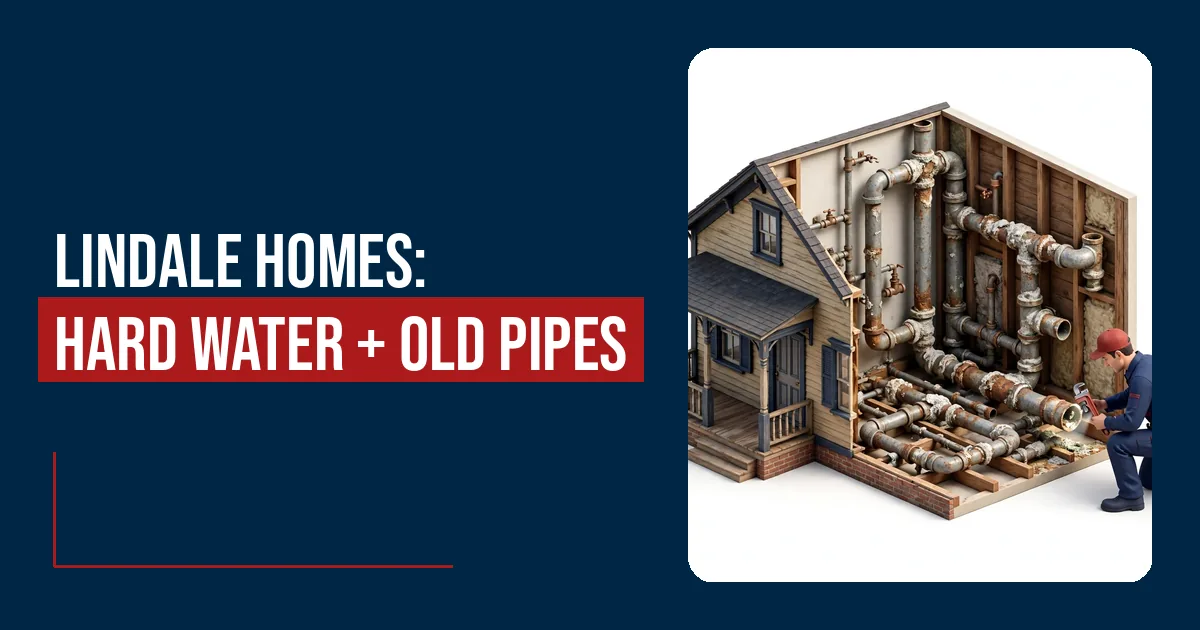
Galvanized pipe was the standard supply material of its era, coated in zinc to resist rust. Decades on, the coating is gone and the steel corrodes from the inside out. Rust scale builds inward until the pipe's effective diameter is a fraction of its original size - the water still runs, but pressure and volume fall away. By the time pinhole leaks appear at the surface, the inside of the line has usually been deteriorating for years.
This is why spot repairs disappoint in Mineola's older homes: fixing the one section that leaked leaves a line that is equally corroded everywhere else. When galvanized is the diagnosis, a planned water line repair or replacement - partial or full - ends the cycle instead of scheduling the next emergency.
Homeowners sometimes ask why the line lasted fifty years and then seemed to fail all at once. The answer is that it did not fail all at once - it failed gradually and invisibly, from the inside, and the symptoms only became noticeable when the internal narrowing crossed the point where everyday demand could no longer get through. Morning showers competing with a washing machine expose a restriction that a single running tap never would, which is why galvanized problems so often seem to appear "suddenly" in a house that has technically been losing pressure for a decade.
Pier-and-Beam Crawl Spaces Hide Leaks
Many of Mineola's early homes sit on pier-and-beam foundations, and their crawl spaces create a specific risk: a slow leak can run for a long time before anyone sees a stain. There is no slab to telegraph a wet spot and no ceiling below to drip - just damp soil, wood that stays wet long enough to suffer for it, and a water bill quietly climbing.
Repair or Replace: The Real Solutions
| Situation | Right Solution |
|---|---|
| Single failed fitting or short copper/PEX section | Targeted repair |
| Buried service line leaking in one place, sound material elsewhere | Section replacement of the failed run |
| Galvanized line with fading pressure and repeat pinholes | Full or staged water line replacement |
| Cast iron stack thinned at the base | Stack section replacement before it fails openly |
| Crawl-space leak of unknown origin | Leak detection first, then the smallest correct repair |
Modern replacement lines use materials without galvanized's internal-rust failure mode, and a planned replacement can usually be staged - worst sections first - when a full repipe is not immediately practical.
When to Call a Plumber in Mineola
Call when pressure keeps fading, when rust tint becomes routine, when repairs start repeating, or when the meter says water is moving and the house says it is not. Pro Plumbers Tyler provides water line repair and replacement across Mineola with upfront flat-rate pricing - call (903) 707-8889.
Water Line Trouble in Mineola, TX?
Whether it is one failed fitting or a galvanized line at the end of its life, Pro Plumbers Tyler will show you the condition of your Mineola line and quote the smallest fix that actually lasts.
Call (903) 707-8889Frequently Asked Questions
Much of Mineola's housing predates modern plumbing - early twentieth century bungalows and frame houses, many still on original materials. Galvanized supply lines rust closed from the inside and cast iron thins with age, so problems here are usually whole-material aging, not single defects.
Fading pressure over years, rust-tinted water, and pinhole leaks recurring in different places along the same line all point to a material at the end of its life. One isolated failure in otherwise sound pipe is a repair; a pattern is a replacement.
Pier-and-beam homes have no slab or ceiling below to reveal a slow leak - it can run into the crawl space for a long time before a stain appears. A rising bill, musty odor, or soft floor is often the first sign, which is why the crawl space should be checked first.
Yes. When deterioration is concentrated - one buried run, one stack section - a targeted or staged replacement solves the problem without repiping the entire home. A plumber should show you the condition of the remaining line before recommending scope.
Yes. We repair and replace water lines throughout Mineola, TX, including service lines from the meter and supply lines in older pier-and-beam homes, with upfront flat-rate pricing. Call (903) 707-8889.