Choosing between a tankless and a traditional tank water heater is the biggest decision in any water heater replacement - and in Tyler, TX, local conditions genuinely affect the answer. East Texas hard water treats the two designs differently, gas and electric homes face different installation realities, and the right size depends on how your household actually uses hot water. This guide compares both honestly, including the long-term cost factors, so you can decide with the full picture.
What's In This Guide
How Each System Works
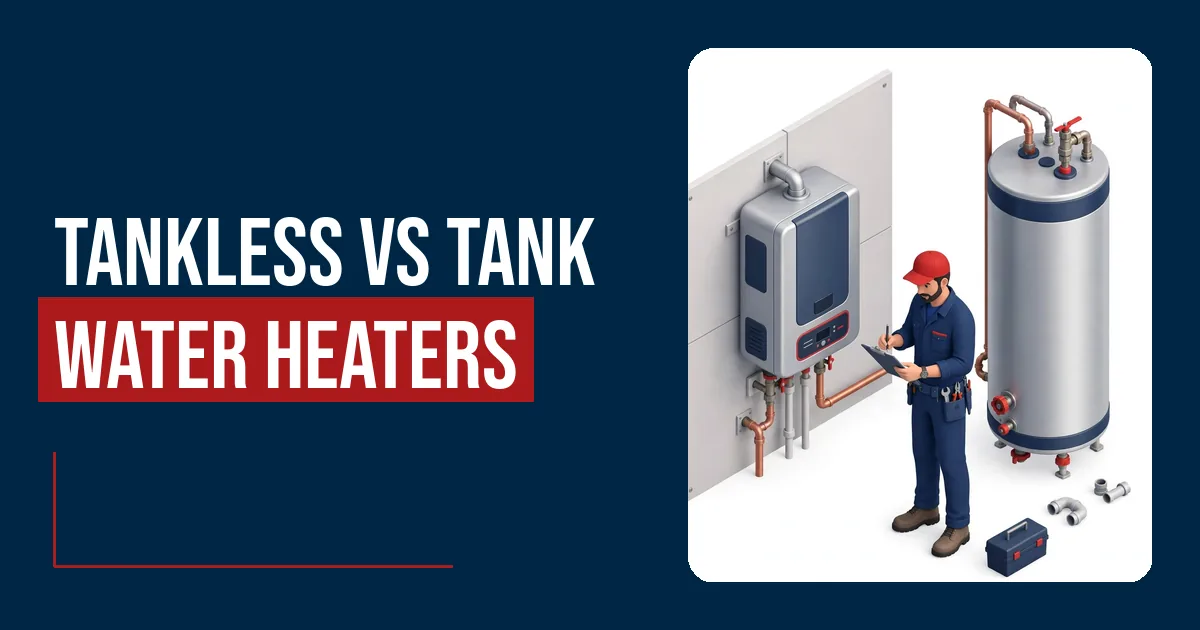
A tank water heater stores a reservoir of hot water and keeps it hot around the clock, ready whenever you open a tap. When the stored water runs low during heavy use, you wait while the tank reheats. A tankless water heater stores nothing: it heats water on demand as it flows through the unit, delivering a continuous supply for as long as you need it - provided the unit is sized for the demand.
| Tank | Tankless | |
|---|---|---|
| Hot water supply | Limited by tank capacity | Continuous, within the unit's flow rating |
| Energy pattern | Standby heat loss, day and night | Energy only while water is drawn |
| Space | Large floor footprint | Compact, wall-mounted |
| Installation | Usually a straightforward swap | Conversion: supply sizing, venting changes |
| Maintenance focus | Flushing, anode rod checks | Descaling - essential in hard water |
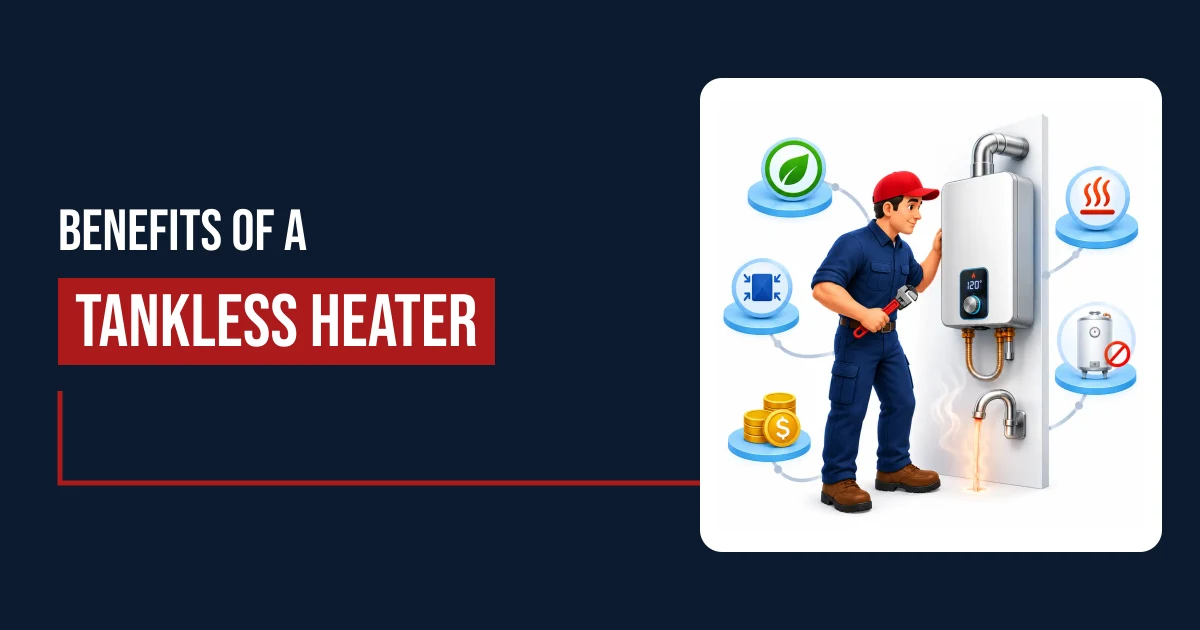
If you are weighing a switch, our tankless water heater service page covers what installation involves, and our earlier post on the benefits of tankless water heaters goes deeper on the advantages.
East Texas Hard Water: The Factor That Changes Everything
Tyler-area water is hard - rich in dissolved minerals that precipitate out as scale wherever water is heated. In a tank, scale settles as sediment at the bottom, insulating the water from the burner or element, rumbling and popping as it heats, and shortening the tank's life. In a tankless unit, scale coats the heat exchanger's narrow passages, throttling efficiency and flow until the unit is descaled.
The practical takeaway: whichever system you choose in East Texas, maintenance is not optional. Tanks need periodic flushing; tankless units need regular descaling, and many Tyler homes pair either system with water softening to slow scale at the source. A tankless unit that never gets descaled in hard water will disappoint - a maintained one performs as promised.
Gas vs Electric
Gas tankless units typically deliver higher flow rates and suit larger households, but require correctly sized gas lines and venting. Electric tankless units avoid venting but draw substantial power, and many homes need panel or circuit upgrades to serve them - a project factor to confirm before choosing. For tank heaters, the same logic applies at smaller scale: staying with your home's existing fuel usually keeps installation simplest, while switching fuels adds scope. Your installer should verify supply capacity for the specific unit, not assume the old setup carries over.
Sizing by Household
Tank sizing is about capacity versus peak demand: a household that runs showers, laundry, and dishes in the same morning hour needs more stored hot water than one that spreads use out. Tankless sizing is about flow at the same moment - the unit must heat the total water being drawn simultaneously, at the temperature rise your incoming water requires. Undersizing is the most common tankless mistake: the unit is fine for one shower and fails when a second tap opens. Count your simultaneous uses honestly, and let the sizing follow the household, not the other way around.
Not Sure Which Fits Your Home?
Pro Plumbers Tyler sizes both systems to your household's real demand and gives one upfront, flat-rate quote - for the system that fits, not the one that is easiest to sell. Serving Tyler and East Texas.
Call (903) 707-8889Long-Term Cost Factors - Without the Hype
Over a system's life, four factors dominate. Purchase and installation: tankless costs more up front, especially as a conversion. Energy: tankless avoids standby loss, so savings grow with usage patterns that leave a tank idling most of the day; a tank's standby loss is the price of always-ready storage. Service life and maintenance: tankless units typically serve longer but demand disciplined descaling in hard water; tanks are simpler to maintain but are replaced more often, and a leaking tank always means full replacement. Water treatment: softening protects both systems and stretches every other factor in your favour. Our water heater installation and repair team can walk these factors against your actual usage - and for replacement pricing factors overall, see our guide to water heater replacement cost in Tyler, TX.
The Verdict by Household Type
Patterns we see across Tyler homes make the choice clearer when it is framed by household rather than by product. Large or growing families with overlapping morning routines lean tankless, provided the unit is sized for simultaneous demand and descaling stays on the calendar - the endless supply solves their actual pain point. Smaller households and couples often find a quality tank the smarter spend: lower installation cost, simple maintenance, and stored capacity that comfortably covers their routines. Homes with limited space - a tight closet or a garage conversion - benefit from the tankless unit's compact wall-mounted footprint. Owners planning to stay long-term can weigh the tankless unit's longer service life more heavily, while anyone preparing a home for sale usually values the tank's straightforward, familiar installation.
Whichever direction you choose, two local rules apply. First, respect the hard water: flushing for tanks, descaling for tankless, and softening if you want either system to reach its full life. Second, size for the household you actually have on your busiest morning - not the average day. Get those two things right and both technologies serve Tyler homes well; get them wrong and even the more expensive system will feel like the wrong purchase.
Frequently Asked Questions: Tankless vs Tank
Neither wins for every home. Tankless suits households that value continuous hot water and will keep up with descaling in our hard water. A tank suits households wanting a simpler, lower-cost installation with plenty of stored hot water. Household demand, fuel, and maintenance habits decide it.
Mineral scale builds on the heat exchanger's narrow passages, reducing efficiency and flow over time. Regular descaling is essential in hard water areas like Tyler, and many homeowners pair a tankless unit with a water softener to slow scale formation at the source.
It does not run out the way a tank does, but it has a flow limit: draw more hot water at once than the unit is rated for and temperatures drop. Correct sizing for your household's simultaneous use is what prevents that.
Gas units generally deliver higher flow rates and suit larger households, but need sized gas lines and venting. Electric units avoid venting but draw heavy power and may require panel upgrades. The right choice follows your home's existing supply and your household's demand.
It depends on usage and maintenance. Tankless costs more to buy and install but avoids standby energy loss and typically lasts longer - provided it is descaled regularly in hard water. Tanks cost less up front but lose energy keeping water hot and are replaced more often. Your household's hot-water pattern tips the balance.