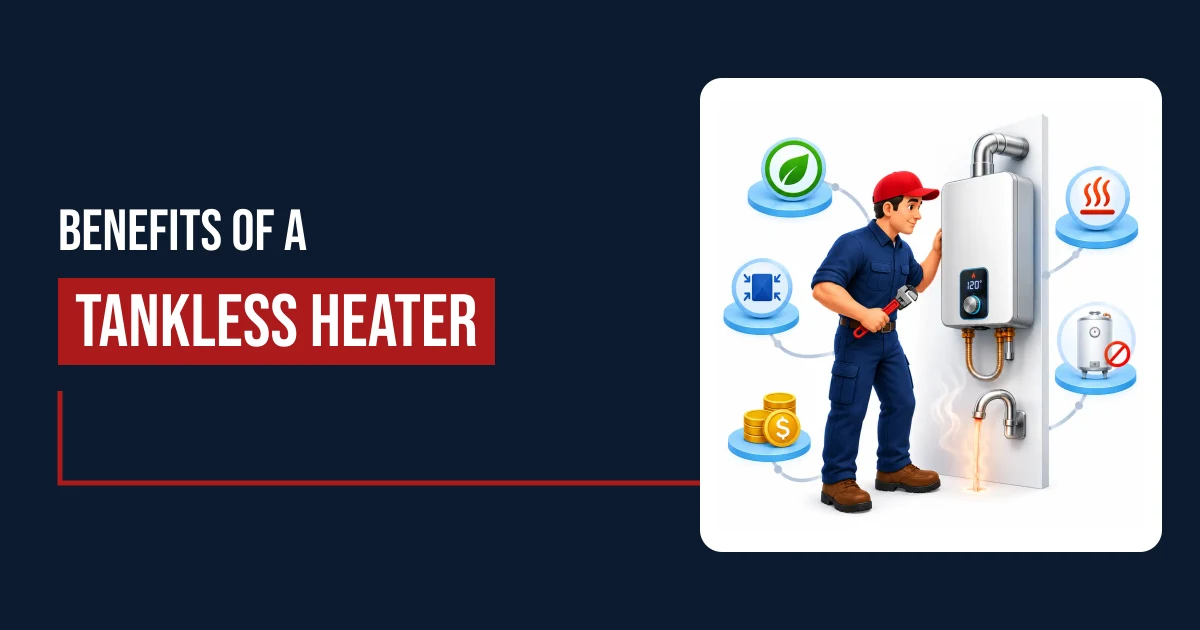
The biggest benefits of a tankless water heater are endless on-demand hot water, lower energy use, a lifespan of 20 years or more, a compact size that frees up floor space, and no bulky tank that can rupture and flood your home. Instead of continuously reheating a stored tank of water, a tankless unit heats water only when you turn on a hot tap - which is why it wastes less energy and never "runs out" the way a tank does. This guide from the licensed team at Pro Plumbers Tyler covers each benefit, the honest trade-offs, and what East Texas homeowners should know before switching.
Tankless water heaters have become one of the most requested upgrades in Tyler-area homes, and for good reason. But like any system, they are the right fit for some households and not others - so it helps to understand both the advantages and the considerations before you decide.
What's In This Guide
How a Tankless Water Heater Works
A conventional water heater keeps 40 to 50 gallons of water hot around the clock, reheating it constantly so it is ready when you need it. A tankless water heater works differently: when you open a hot tap, a flow sensor detects the demand and fires up a powerful gas burner or electric element that heats the water instantly as it passes through a heat exchanger. When you close the tap, it shuts off.
Because there is no stored tank, there is no "standby" energy wasted keeping water hot that no one is using - and there is no tank to run out, corrode, or eventually rupture. That single design difference is the source of nearly every benefit below.
The Key Benefits of Going Tankless
Because it heats on demand, a properly sized tankless unit delivers continuous hot water - no more cold showers after the tank runs dry. Ideal for larger families and back-to-back showers.
With no tank to keep hot 24/7, a tankless heater eliminates standby heat loss. The U.S. Department of Energy notes tankless units are more energy-efficient than storage tanks, especially in lower-use homes.
Tankless units commonly last 20 years or more - roughly double a conventional tank's 8 to 12 years. That often means one tankless unit instead of two tank replacements.
A tankless heater is a compact unit that mounts on a wall, freeing up the floor space a bulky tank occupies in a garage, closet, or utility room.
A failed storage tank can dump 40+ gallons and cause major water damage. With no tank, that specific catastrophic failure is off the table.
Stored tanks accumulate sediment and can harbor rust over time. Because a tankless unit does not store water, you are not drawing from a tank full of settled sediment.
Tankless vs. Tank: Side by Side
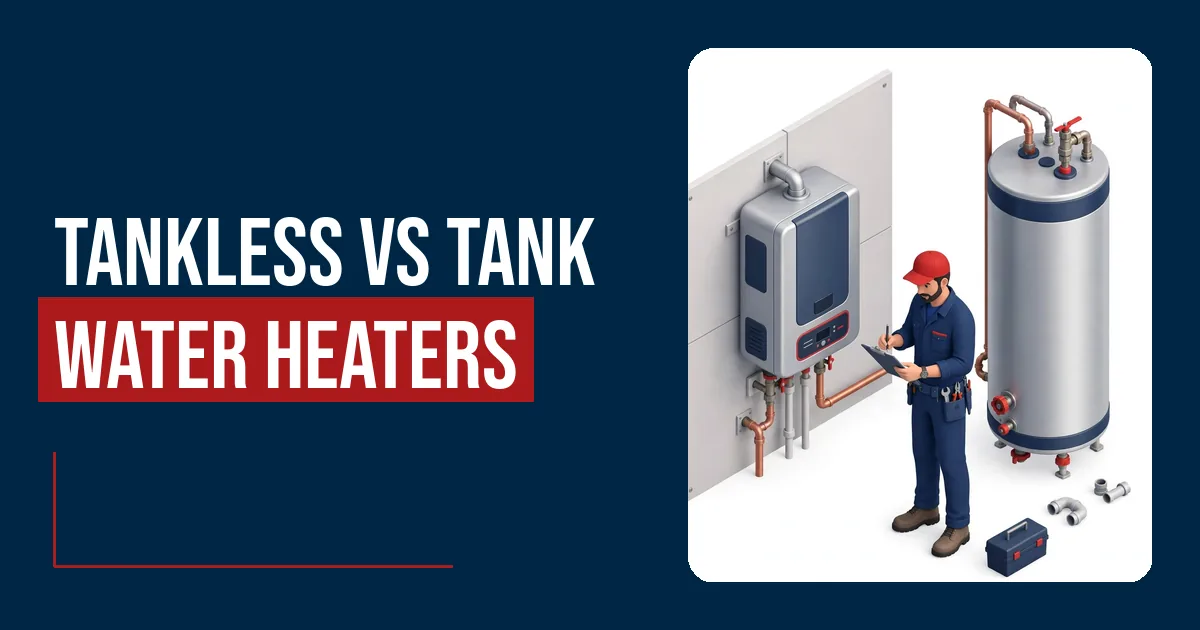
Seeing the two side by side makes the trade-offs clear. Neither is "best" for every home - it depends on your hot-water habits, budget, and how long you will stay:
| Feature | Tankless | Conventional Tank |
|---|---|---|
| Hot water supply | Endless, on demand | Limited to tank size |
| Energy use | Lower (no standby loss) | Higher (reheats constantly) |
| Lifespan | 20+ years | 8-12 years |
| Footprint | Compact, wall-mounted | Large floor unit |
| Upfront cost | Higher | Lower |
| Flow-rate limit | Yes - must be sized correctly | No, but tank can empty |
| Catastrophic tank flood | Not possible | Possible |
| Hard-water maintenance | Periodic descaling | Periodic flushing |
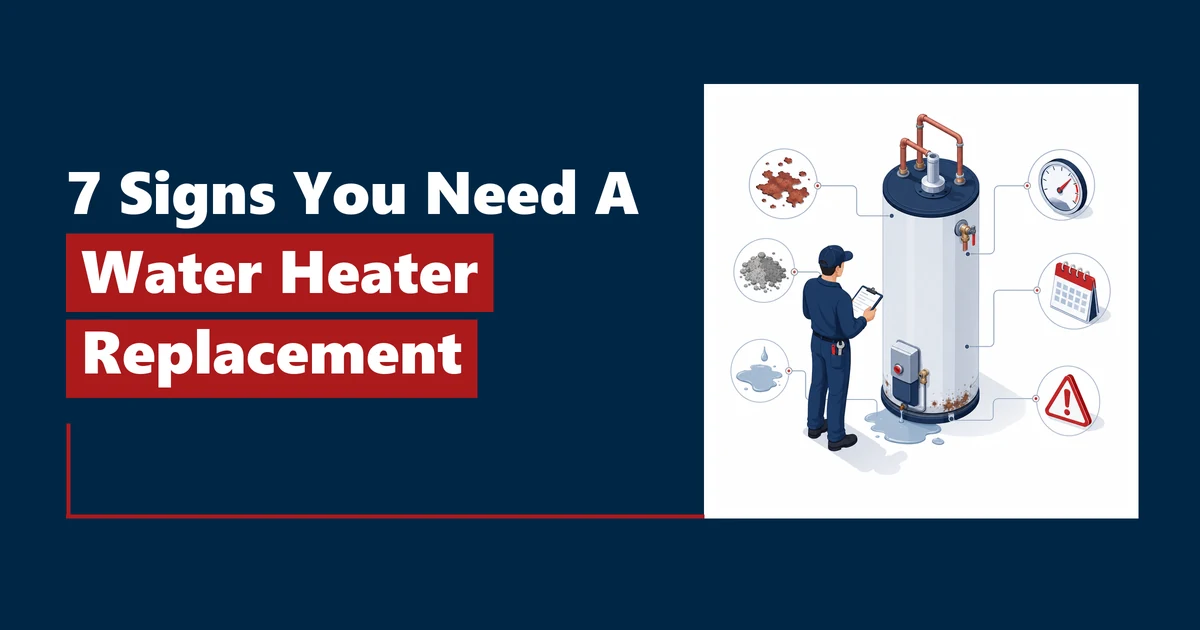
For a deeper look at when replacement makes sense either way, see our guide on the signs you need a water heater replacement.
The Honest Trade-Offs
A good plumber will tell you the downsides too. Tankless is excellent, but it is not the right answer for every home:
- Higher upfront cost. The unit and installation cost more than a tank, especially if gas lines, venting, or electrical need upgrading. The savings build over time, not overnight.
- Flow-rate limits. A tankless heater can only heat so much water per minute. If several showers and appliances run at once and exceed that limit, the temperature drops - which is why correct sizing is essential.
- Hard-water descaling. In East Texas, mineral scale builds on the heat exchanger and must be flushed periodically to protect efficiency and lifespan (more on this below).
- Installation is not a simple swap. Converting from a tank often requires new venting, gas-line sizing, or electrical capacity - work that must be done by a licensed plumber to code.
Tankless and East Texas Hard Water
Tyler-area water is naturally hard, and hard water is the main thing that shortens a tankless heater's life. As water passes through the heat exchanger, dissolved minerals leave scale on the internal surfaces. Left unchecked, that scale reduces efficiency, restricts flow, and can eventually damage the unit.
The good news is that this is easily managed. A tankless unit should be descaled (flushed) periodically - and pairing it with a water softener or filtration system dramatically reduces scale buildup, letting the heater run longer between services and reach its full 20-plus-year lifespan. If you are considering tankless in Tyler, factor water treatment into the plan.
Thinking About Going Tankless?
Pro Plumbers Tyler provides licensed water heater installation and repair in Tyler, TX, including tankless sizing, installation, and descaling. We'll help you choose the right unit for your home's hot-water demand.
Call (903) 707-8889Is a Tankless Water Heater Right for You?
A tankless water heater is usually the right choice when several of these apply to your household:
- You use a lot of hot water - a larger family with back-to-back showers benefits most from endless hot water.
- You plan to stay in the home for years - the upfront cost pays back through energy savings and a longer lifespan over time.
- You want to reclaim space - a wall-mounted unit frees up the footprint of a floor-standing tank.
- You want to avoid a tank flood - no stored tank means no catastrophic tank rupture.
- You're willing to maintain it - periodic descaling keeps it efficient in hard-water East Texas.
If your hot-water use is low and you are on a tight upfront budget, a modern high-efficiency tank may still be the better value. A licensed plumber can weigh your specific demand, fuel type, and space to give you an honest recommendation.
Professional Installation Matters
Tankless installation is more involved than swapping a tank. Depending on the unit, it may require resizing the gas line to deliver enough fuel, adding proper venting, or upgrading electrical capacity - all of which must be done to code and, in Tyler, typically require a permit. A unit that is undersized or improperly vented will underperform and can be unsafe.
Pro Plumbers Tyler serves Tyler, Whitehouse, Lindale, Bullard, Chandler, Noonday, Gladewater, Kilgore, Van, Troup, and all surrounding East Texas communities with licensed water heater installation and repair. Whether you want a tankless upgrade, a tank replacement, or descaling service, our team will size and install it correctly the first time.
Frequently Asked Questions About Tankless Water Heaters
The main benefits are endless on-demand hot water, lower energy use because there is no standby heat loss, a longer lifespan of 20 years or more, a compact wall-mounted size that frees up floor space, and no large tank that can rupture and flood a home.
They save on energy because they only heat water when you use it, eliminating the standby loss of continuously reheating a full tank. They cost more to install upfront, so the savings build over time - which is why they make the most sense for households that use a lot of hot water and plan to stay long term.
A tankless water heater typically lasts 20 years or more, roughly double the 8 to 12 year life of a conventional tank. In hard-water areas like East Texas, regular descaling is important to reach that lifespan, since scale on the heat exchanger is the main thing that shortens it.
It will not run out over time the way a tank does, because it heats water continuously on demand. However, it has a flow-rate limit - if too many fixtures draw hot water at once and exceed that limit, the temperature can drop. Correct sizing for your household prevents this.
Yes. East Texas hard water leaves mineral scale on the heat exchanger, so a tankless unit should be descaled (flushed) periodically to keep it efficient and protect its lifespan. A water softener or filtration system reduces scale and lets the unit run longer between services.
A tankless water heater is usually worth it for households that use a lot of hot water, want lower energy bills and a longer lifespan, and plan to stay in the home for years. A licensed plumber can assess your hot-water demand, fuel type, and space to recommend the right unit and size.